She Knew Every Voice in Town — And That Knowledge Once Saved a Life
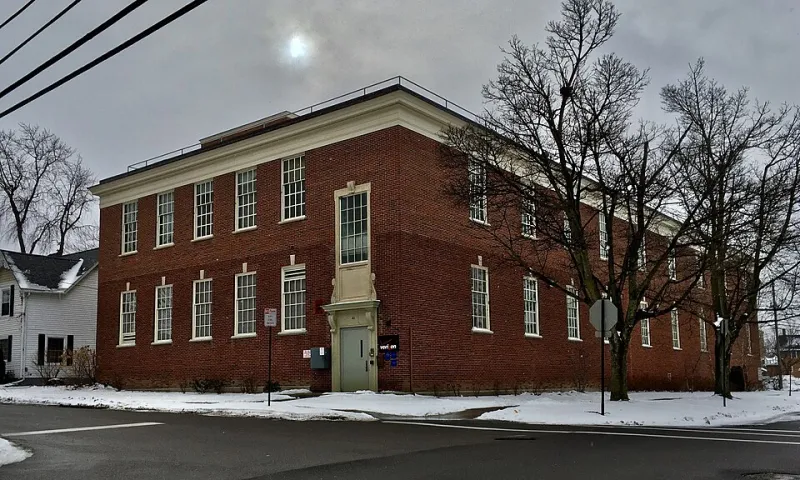
Photo: Andre Carrotflower, CC BY-SA 4.0, via Wikimedia Commons
In the winter of 1947, a telephone operator named Mabel Hoskins was working the switchboard in Harlan, Iowa when a call came in that didn't say much. A woman's voice. A few words. Then silence. Most operators would have assumed a dropped connection and moved on. Mabel recognized the voice — she always did — and something in its flatness made her stay on the line. She called the woman's neighbor. The neighbor found her in time.
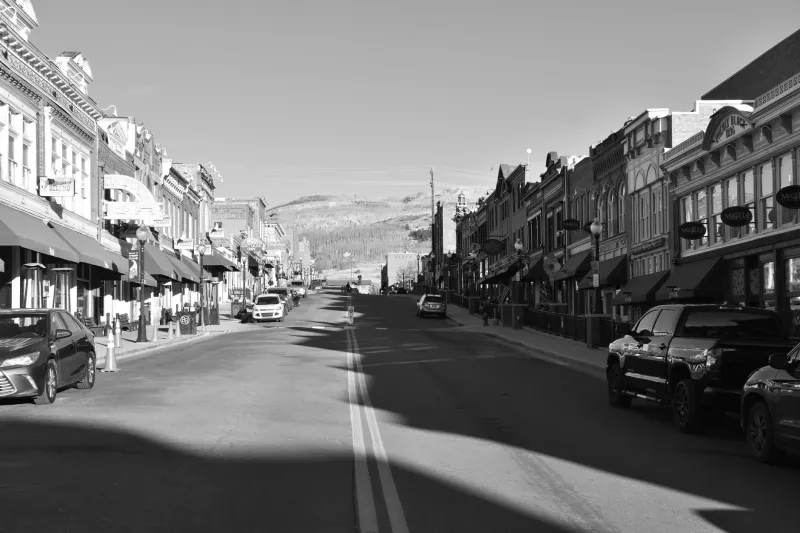
 Photo: Harlan, Iowa, via www.cityofharlan.com
Mabel never got a medal. She probably didn't even get a mention in the local paper. She just went back to the switchboard.
The Human Algorithm
Before direct dialing transformed American telecommunications in the 1950s and 1960s, every phone call in a small town passed through a human being. The telephone operator wasn't a passive conduit. She — and it was almost always a she — was the living infrastructure of community communication. She connected calls, yes. But she also knew things.
In a town of a few hundred people, a skilled operator could identify callers by voice alone without them ever stating their name. She knew which farmer called the feed store every Tuesday morning. She knew when the doctor's line had been busy for three hours straight. She knew who called whom, and how often, and whether the pattern had changed. None of this was surveillance in the modern sense. It was simply the byproduct of being the point through which every conversation in town flowed.
This knowledge had practical consequences that went far beyond routing calls efficiently. Operators in small towns functioned as informal emergency dispatchers, community memory banks, and early warning systems for crises that no one had yet thought to give a name.
Before 911 Existed, There Was Her
The national 911 emergency system didn't become widely available across the United States until the 1970s and 1980s. Before that, a person in crisis had limited options. In rural America, one of the most reliable options was simply calling the operator.
Documented accounts from telephone company archives and local histories paint a consistent picture. Operators fielded calls from people having heart attacks, fires spreading through farmhouses, children who had fallen into wells, and drivers who had gone off icy roads in the dark. They didn't have protocols. They improvised. They called doctors directly, reached volunteer fire departments, located family members, and in some cases stayed on the line for hours with people who had no one else to talk to.
A 1952 account preserved in the archives of the Wisconsin State Historical Society describes an operator in a small Chippewa County town who noticed that an elderly man who called his daughter every Sunday morning had not called for two consecutive weeks. She reached out to the daughter herself. The man had suffered a stroke and had been unable to call for help. He survived.
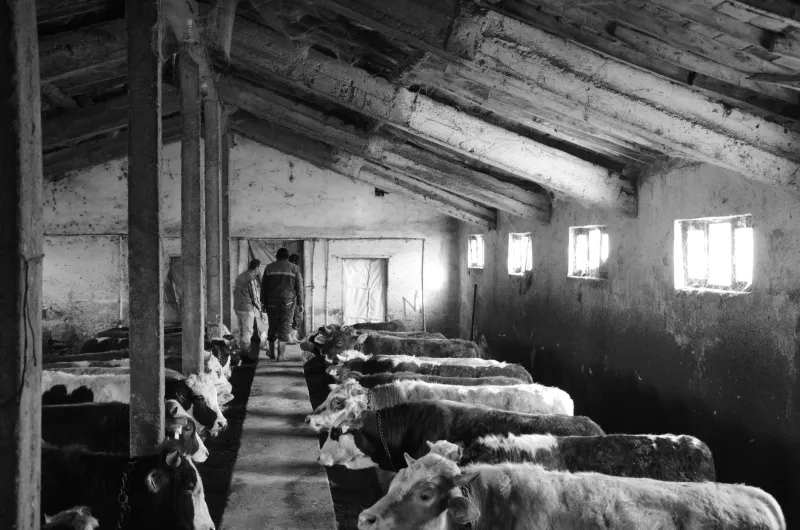
 Photo: Wisconsin State Historical Society, via live.staticflickr.com
What made this possible wasn't technology. It was attention. The sustained, intimate, unreplicable attention of a person who had been listening to the same community for years.
The Knowledge Nobody Catalogued
There's a concept in economics and philosophy called "tacit knowledge" — the kind of understanding that exists in a person's head and hands but can't be fully written down or transferred through a manual. A master carpenter knows things about wood that no textbook captures. A veteran nurse reads a patient's condition in ways that resist documentation.
Small-town telephone operators carried an extraordinary amount of tacit knowledge about their communities. They knew which households had medical emergencies regularly. They knew the sound of genuine distress versus a bad connection. They knew which calls came in at unusual hours and what that typically meant. They knew the rhythms of a town the way a longtime resident knows the rhythms of a neighborhood — not through data, but through years of uninterrupted attention.
When direct dialing arrived, all of that knowledge simply ceased to exist in any transferable form. There was no archive. No handoff. The operators retired or took other jobs, and the communities they had quietly monitored for decades became, in a specific and underappreciated way, less legible to themselves.
Remarkable Moments That History Almost Missed
The documented cases are scattered across local histories, telephone company commemorative publications, and oral history archives — rarely assembled in one place, which is part of why the story of what operators actually did remains so underappreciated.
In Beatrice, Nebraska, an operator named Clara Voss is credited in a 1939 local history with alerting a family to a barn fire on their property before the family was even aware of it — she had overheard a neighboring farmer mention the smoke while placing an unrelated call and immediately rang the family's line. In a small Tennessee county in 1944, an operator recognized the voice of a missing child who called in a confused state and was able to tell search parties exactly where the child had to be based on the exchange prefix of the incoming call. In rural Minnesota in the early 1950s, an operator coordinated the delivery of a baby over the telephone when a doctor couldn't reach a laboring woman in time — she stayed on the line, relayed instructions from the physician to a neighbor, and reportedly remained calm throughout.
 Photo: Beatrice, Nebraska, via i0.wp.com
None of these women are household names. None of them have monuments. Most of them would probably have been baffled by the suggestion that what they did was remarkable. It was just the job.
What Automation Quietly Took Away
The shift to direct dialing was framed entirely as progress, and in most respects it was. Faster connections, lower costs, expanded capacity. Nobody mourned the switchboard at the time. Why would they? The calls still went through.
But the calls went through differently. They went through without anyone listening. Without anyone noticing that the Sunday morning call hadn't come. Without anyone recognizing a voice and pausing because something sounded wrong.
Modern emergency systems are extraordinarily sophisticated. GPS-linked dispatch, text-to-911, predictive response algorithms — the infrastructure for crisis response today would have seemed like science fiction to Mabel Hoskins in her Iowa switchboard room. And yet there is something those systems cannot do. They cannot notice what isn't there. They cannot respond to the absence of a call that should have come.
The small-town telephone operator was, in the most literal sense, a person whose job was to pay attention. To everyone. All the time. It turns out that's harder to automate than anyone realized.