Farmed Out: The Vanished American Summer That Turned City Kids Into Something Tougher
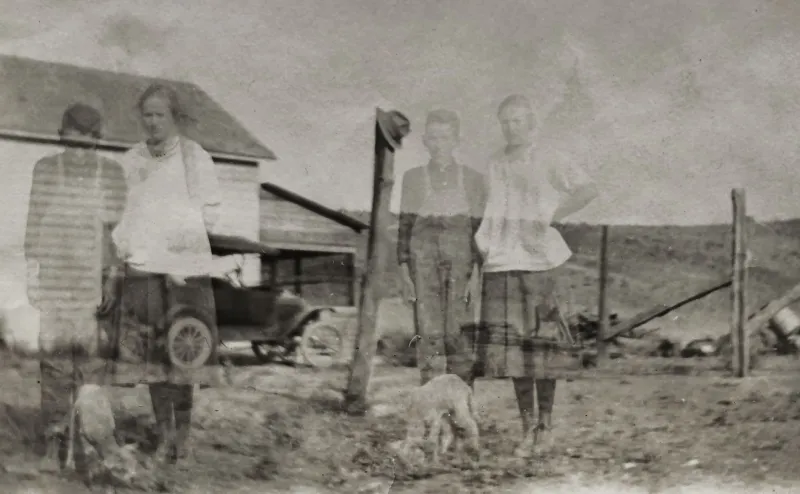
Somewhere around 1910, a six-year-old named Emilio Ferrara boarded a train in South Philadelphia with a handwritten note pinned to his coat. The note had his name, his mother's address, and the name of a farm family in Lancaster County who had agreed to take him for the summer. He had never met these people. He would spend three months helping them tend chickens, haul water, and pick vegetables before returning home in September — quieter, browner, and according to his mother, completely transformed.
 Photo: Lancaster County, via travellemming.com
Emilio's story wasn't unusual. It was the whole point.
The System Nobody Wrote Down
In the early decades of the twentieth century, a loosely organized but surprisingly widespread practice took hold in urban immigrant and working-class communities across the Northeast and Midwest. Families who couldn't afford vacations — and whose cramped tenement apartments offered no relief from summer heat — began arranging what social workers of the era called "child placement summers." The idea was straightforward: a city child would go live with a rural family for anywhere from six weeks to four months, contributing modest labor in exchange for food, shelter, and open air.
There were no formal contracts. No background checks. No intake forms. Arrangements were made through church networks, immigrant mutual aid societies, neighborhood word of mouth, and sometimes through classified ads in ethnic-language newspapers. A Polish family in Chicago might send their ten-year-old to a cousin's farm in Wisconsin. An Italian family in Brooklyn might connect through their parish with a farm family upstate who needed an extra pair of hands during harvest.
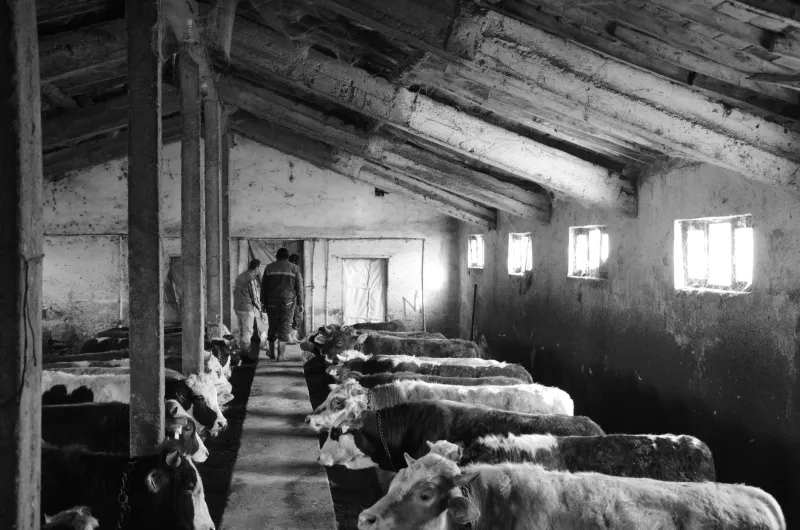
The children weren't treated as hired farmhands — at least not in most cases. The expectation was light labor: feeding animals, gathering eggs, weeding garden rows, running errands. In exchange, they got something city life simply couldn't provide: space, sunlight, and the particular education that comes from being somewhere unfamiliar without your parents.
When Doctors Actually Prescribed Fresh Air
What's striking in hindsight is how enthusiastically the medical establishment endorsed this arrangement. Pediatricians and public health officials in the early 1900s were deeply alarmed by conditions in urban tenements — overcrowding, poor ventilation, contaminated water, and summer heat that killed thousands of children annually from gastrointestinal illness. Fresh country air wasn't a metaphor. It was a genuine prescription.
Public health reformers like Lillian Wald, who ran the Henry Street Settlement on Manhattan's Lower East Side, actively facilitated rural placements for city children. Settlement houses kept lists of willing farm families. Some cities ran semi-organized programs through their health departments. A 1914 report from the New York State Charities Aid Association described child placement summers as "among the most effective interventions available to the urban poor child" — language that sounds almost comically clinical today but reflected a real conviction at the time.
 Photo: Lillian Wald, via www.amny.com
 Photo: Henry Street Settlement, via c8.alamy.com
The children who participated in these arrangements didn't just get healthier physically. Observers noted something harder to measure: they came back different in ways that went beyond a summer tan. More independent. More comfortable with silence. Less rattled by difficulty.
What the Kids Actually Learned
Here's the part that tends to surprise people when they hear about this practice: most of the children who experienced these summers remembered them as formative rather than frightening. Oral history collections from the mid-twentieth century are full of elderly Americans describing their "farm summers" with a warmth that borders on reverence.
Part of what made them work, paradoxically, was the absence of parental oversight. A child dropped into an unfamiliar household with unfamiliar adults had to figure things out. They had to read social cues from strangers. They had to ask for help from people who weren't obligated to give it gently. They had to fail at tasks — milking a cow, fixing a fence — without a parent nearby to soften the failure.
Developmental psychologists have a term for this kind of experience now: "productive stress." It's the idea that moderate, manageable challenges encountered without immediate parental rescue are precisely the conditions under which children develop genuine self-confidence. The farm summers of the early twentieth century were, without anyone using the vocabulary, a masterclass in exactly this.
The Practice Fades, the Insight Lingers
By the 1940s and 1950s, the informal placement summer had largely disappeared. Rising wages meant more families could afford actual vacations. The commercial summer camp industry expanded rapidly, offering a supervised, structured alternative that felt safer and more legible to postwar parents. The particular desperation that had made informal rural placements necessary — urban poverty, tenement heat, immigrant mutual aid networks — faded as living conditions improved.
But the underlying insight didn't go away. It just got buried.
Researchers studying childhood resilience in the past two decades have repeatedly bumped into findings that echo what those farm summers were doing intuitively. Studies on "free-range" childhood, on unstructured outdoor time, on the developmental benefits of what psychologist Peter Gray calls "age-mixed play away from adult supervision" — all of them circle back to a similar conclusion. Children who spend meaningful time navigating unfamiliar situations without parental scaffolding develop something that structured enrichment programs struggle to replicate.
A 2019 study from the University of Colorado found that children with more unstructured, adult-free time showed significantly better executive function than those in heavily scheduled environments. The farm families of Lancaster County weren't running an experiment. But they were, accidentally, running the right one.
Something Worth Recovering
Nobody is seriously proposing that we revive the practice of pinning notes to six-year-olds and putting them on trains to strangers. The social infrastructure that made it work — tight-knit ethnic communities, mutual aid networks, an era when trust between neighbors operated differently — doesn't exist in the same form today.
But there's something in the spirit of it worth sitting with. The early twentieth century instinct that children needed summers that were genuinely unfamiliar, genuinely challenging, and genuinely beyond the reach of their parents' comfort — that instinct wasn't wrong. It was just expressed in a way we've since forgotten how to recognize.
Emilio Ferrara, the six-year-old with the note pinned to his coat, eventually became a contractor in South Jersey. His daughter, who shared his story with a local historical society in 1987, said he talked about that Lancaster farm summer his entire life. Not because it was easy. Because it wasn't.