The Sport America Was Obsessed With — Then Completely Forgot It Ever Existed
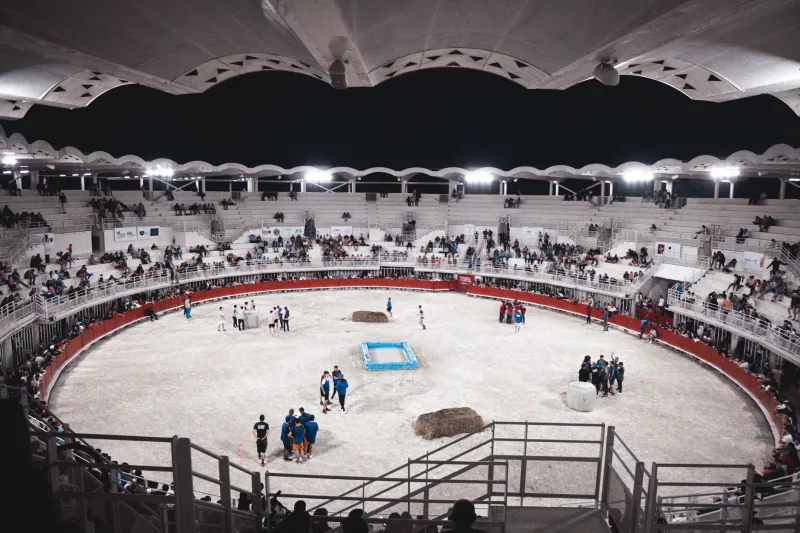
Imagine a sports arena packed with ten thousand screaming fans. Not for a boxing match. Not for baseball. For walking.
Not jogging. Not sprinting. Walking — sustained, strategic, brutally competitive walking — across six days and six nights, with athletes circling an indoor track while crowds bet money, threw food from the stands, and screamed encouragement at competitors who hadn't slept in 40 hours.
This was pedestrianism, and for roughly three decades, it was one of the most popular spectator sports in the United States.
The Six-Day Grind
The most popular format was called the "go as you please" race — a six-day endurance event where competitors could walk or run as they chose, with the winner determined by total miles covered. Events were held in Madison Square Garden and similar large venues across the country. Admission was charged. Newspapers ran daily updates. Athletes became celebrities with fan followings, endorsement deals, and their own trading cards.
 Photo: Madison Square Garden, via wallpaperaccess.com
The distances covered were genuinely extraordinary. The sport's biggest star, Edward Payson Weston, walked more than 5,000 miles across the United States at age 70 — in 1909 — and was greeted by crowds in every city he passed through. Another celebrated pedestrian, Frank Hart — one of the few Black athletes to achieve mainstream sports celebrity in that era — drew enormous crowds and set records that stood for years.
 Photo: Frank Hart, via images-na.ssl-images-amazon.com
 Photo: Edward Payson Weston, via images.saymedia-content.com
At the sport's peak in the late 1870s and early 1880s, six-day pedestrian events in New York generated more gate revenue than most other sporting events of the time. The New York Times covered race standings the way it now covers playoff brackets.
Who Was Watching
This wasn't a sport for the elite. Pedestrianism was deeply working-class entertainment. Admission was cheap enough that factory workers and tradespeople could attend in shifts — which they did, often watching through the night, sleeping in their seats, and waking up to check whether their favorite competitor had maintained pace.
The culture around the events was raucous and participatory. Fans would camp in the arena for multiple days. Vendors sold food and beer. Bands played to keep the atmosphere going. The competitors, stumbling through day four or five on almost no sleep, were performing a kind of public endurance theater that audiences found genuinely gripping.
There was also significant gambling, which added a financial stake that kept fans intensely engaged with the race standings.
The Science They Were Accidentally Doing Right
Here's where it gets genuinely surprising: exercise physiologists who've studied pedestrianism in recent years have noted that the top competitors were applying endurance strategies that modern sports science would largely endorse.
The best pedestrians understood pacing in sophisticated ways — maintaining a consistent stride rate rather than surging and crashing, managing caloric intake during competition, using strategic rest periods to recover without losing too much ground. Some athletes had what amounted to informal coaching teams who tracked their competitors' pace and advised adjustments.
The six-day race format also happens to align closely with what modern researchers call "ultra-endurance" events, a category of competition that has seen a significant revival in the past two decades through events like multi-day trail races and ultra-marathons. The physiological challenges those modern athletes face — sleep deprivation, caloric management, joint stress over sustained distances — are exactly what pedestrians were navigating empirically in the 1880s, without the benefit of sports science to explain why their techniques worked.
What Killed It
The collapse of pedestrianism was sudden enough that it looks almost deliberate in hindsight — though it wasn't.
Bicycle racing arrived in the late 1880s and early 1890s and immediately captured the public imagination. Bicycles were new, mechanical, exciting, and fast. The same arenas that had hosted six-day walking races began hosting six-day cycling races, and audiences followed the novelty.
Simultaneously, professional baseball was consolidating into a genuinely national sport with stable leagues, consistent schedules, and the kind of narrative structure — teams, rivalries, seasons, championships — that individual pedestrian events couldn't match.
Within roughly a decade, pedestrianism went from front-page news to a historical footnote. The athletes who had been household names were largely forgotten within a generation. Edward Payson Weston — who was still walking competitively into his seventies — became a curiosity rather than a celebrity.
The sport didn't fade. It dropped off a cliff.
Why Nobody Talks About It
Sports history tends to get written around the sports that survived. Baseball, boxing, and football all have robust institutional memories — record books, hall of fame structures, continuous professional leagues that keep the history alive. Pedestrianism has none of that. The records were kept in newspaper archives that nobody digitized. The athletes have no hall of fame. The sport has no modern professional equivalent to keep the story relevant.
What's left are scattered newspaper clippings, a handful of academic papers, and the occasional antique trade card featuring a long-forgotten walker mid-stride.
But the story is worth recovering — not just as a sports curiosity, but as a window into how Americans once watched and celebrated physical endurance. In an era before professional football existed and baseball was still finding its footing, working-class Americans packed arenas to watch ordinary people push their bodies to extraordinary limits over six straight days.
It wasn't pretty. It wasn't fast. But apparently, it was impossible to look away.