The Grocer Who Put His Name on the Can: How Small-Town Store Labels Fed America Its Own Identity
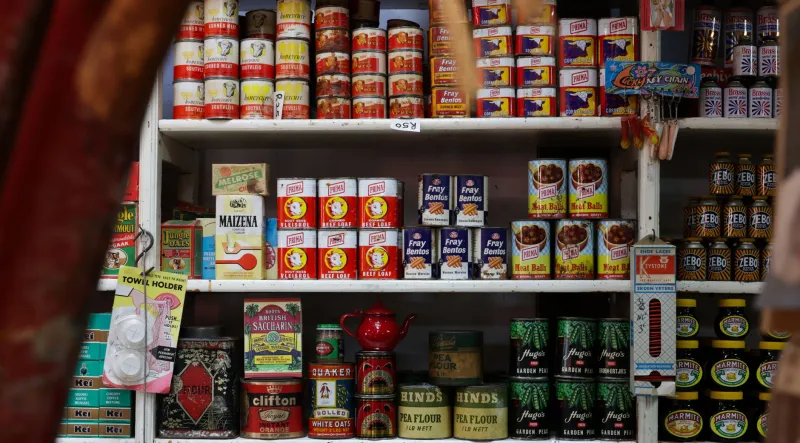
There's a particular kind of thrill that comes from finding something in an antique store that stops you cold. For food historians and vintage collectors, that thing is often a dented tin can — hand-stamped with a name like Merriweather's Best Corn or Holden's Pride Tomatoes — with no address, no barcode, and no corporate logo. Just a grocer's name, pressed into metal, from a town you've probably never heard of.
Those cans weren't oddities. They were the norm.
Before the Big Brands Arrived
For much of the late 1800s and well into the mid-20th century, independent American grocers didn't just sell food — they branded it. A store owner in rural Ohio or small-town Georgia could contract with a regional cannery, slap his own label on the product, and sell it under his store's name. Flour came in custom-printed sacks. Preserves were jarred in-house. Coffee was roasted and blended locally, then sold under whatever name the grocer thought sounded trustworthy.
This wasn't fringe behavior. It was standard practice. The National Grocers Association estimated that by the 1920s, tens of thousands of independent grocers across the country were operating some version of a private label program — and the variation was staggering. A can of tomatoes from a grocer in Appalachian Virginia might taste genuinely different from one sold two counties over, because different regional canneries used different tomato varieties, different salt levels, and different processing methods.
Your pantry, in other words, told people exactly where you were from.
The Stamp of Local Trust
What made these private labels powerful wasn't just variety — it was accountability. When your grocer's name was on the can, he had skin in the game. If the peaches were mealy or the corn was off, customers knew exactly who to blame. They'd walk back into that store and say so, loudly.
This created a feedback loop that national brands could never replicate. Big companies could hide behind corporate anonymity. A grocer named Harold Finch, whose name was literally stamped on the green beans, could not.
Custom flour sacks became something of an art form in rural communities. Fabric mills began printing sacks in colorful patterns specifically because families were sewing the empty bags into clothing, quilts, and curtains. Grocers who stocked the prettiest sacks attracted loyal customers. Food packaging had become a form of local culture.
What Killed It
The story of how private label grocers disappeared is, at its core, a story about infrastructure. The interstate highway system made national distribution dramatically cheaper. Chain supermarkets — A&P, Piggly Wiggly, Safeway — built massive buying power that independent stores simply couldn't match. And national advertising on radio, then television, created something new: brand desire. Suddenly, people didn't just want tomatoes. They wanted Del Monte tomatoes, because they'd heard the jingle.
By the 1960s, the independent grocer with his own stamped cans was mostly a memory. The shelves of American supermarkets had homogenized into a landscape that looked more or less identical from Maine to Montana. The regional food identity encoded in those old labels had been quietly erased.
What's strange is how little anyone noticed at the time. It happened gradually, then all at once — and most Americans simply moved on to the next convenient thing.
The Quiet Comeback
Here's where the story gets interesting again.
In the past decade or so, a small but determined wave of independent grocers has been reviving the private label tradition — not out of nostalgia, but out of genuine market strategy. Regional grocery co-ops in the Pacific Northwest have begun selling house-branded dry goods and preserved foods. A handful of specialty grocers in the South are working directly with local farms to produce store-labeled canned goods with traceable sourcing. Some Midwestern grocers have returned to custom-milled flour sold under their own store names.
 Photo: Pacific Northwest, via process.filestackapi.com
The economics are different now — these aren't budget-tier products trying to undercut national brands. They're premium items, often marketed on the exact qualities that made the originals interesting: local sourcing, small-batch production, and the kind of accountability that comes when someone's actual name is on the label.
Farmers markets have accelerated the trend in a different direction. Vendors selling house-made jams, pickled vegetables, and smoked goods are essentially recreating the same hyper-local food identity that stamped cans once provided — just without the tin.
Why It Matters More Than You'd Think
Food historians argue that the loss of private label culture wasn't just a business shift — it was a cultural one. When every town's shelves look identical, something genuinely local disappears. The can of tomatoes that tasted like your town, processed by your regional cannery, sold by your grocer who knew your family by name — that was a form of community identity encoded in something as ordinary as lunch.
There's a reason people get emotional about food from their childhood region. It's not just flavor. It's the specific combination of local agricultural decisions, regional taste preferences, and small-scale production choices that made that food slightly unlike anything else in the country.
Those stamped cans were carrying all of that information, quietly, on every shelf in America.
The next time you're browsing a farmers market or stumble across a regional grocery co-op with its own store label, you're not just looking at a product. You're looking at something that used to be everywhere — and that most of the country forgot to miss.