The Quiet Power Behind the Library Desk: How Small-Town Librarians Once Shaped What America Thought
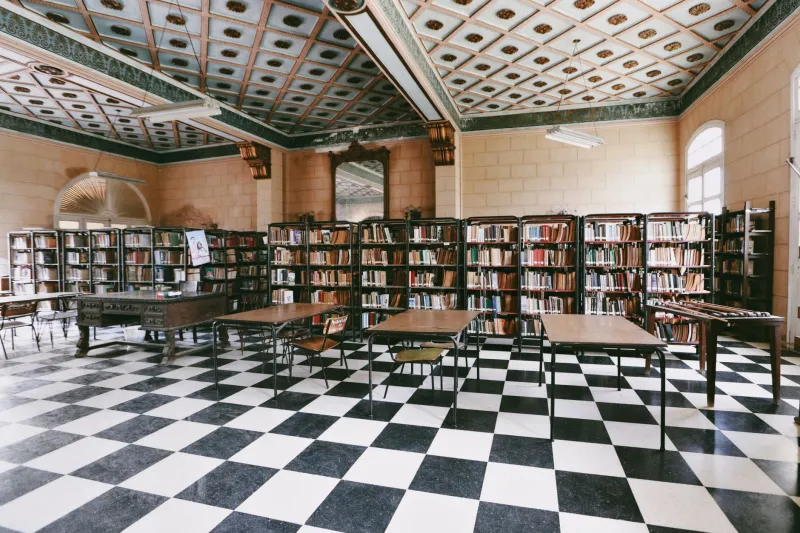
Picture a small American town in, say, 1952. Population maybe 4,000. One pharmacy, two churches, a diner, a hardware store, and a public library — usually a Carnegie-funded brick building with tall windows and a brass door handle worn smooth from decades of use.
Now picture the woman behind the circulation desk. She knew every family in town. She knew which kids were struggling in school, which farmers were trying to teach themselves accounting, which housewives were quietly reading books that their husbands would have raised an eyebrow at. And she decided — largely on her own — what books would sit on those shelves.
That was a staggering amount of power. And almost nobody talks about it.
The Original Algorithm
Before there were recommendation engines, trending lists, or bestseller algorithms, there was the small-town librarian. She was the filter between a community and the vast world of published knowledge, and the decisions she made were deeply personal, culturally loaded, and enormously consequential.
In rural and small-town America — where the nearest bookstore might be 50 miles away and mail-order was slow and expensive — the local library wasn't a supplement to how people accessed information. It was how people accessed information. Period. If a book wasn't on those shelves, it effectively didn't exist for most residents.
Librarians knew this. The good ones took the responsibility seriously in ways that went far beyond alphabetizing spines. They tracked what their patrons were reading, anticipated what subjects would matter to their communities, and made acquisition decisions that reflected a genuine curatorial vision. In agricultural communities, that might mean building exceptional collections on soil science and crop rotation. In mill towns, it might mean labor history and economics. In communities with significant immigrant populations, librarians sometimes built multilingual collections decades before any official policy encouraged it.
Quietly Pushing Back
The more fascinating — and largely untold — story is what happened when outside pressure tried to dictate what those shelves would hold.
During the Red Scare of the late 1940s and 1950s, public libraries became unexpected battlegrounds. The American Library Association formally adopted its Library Bill of Rights in 1939, asserting that libraries should resist censorship and provide access to all perspectives. But on the ground, in towns across America, that principle ran directly into pressure from local politicians, parent groups, veterans' organizations, and occasionally the FBI itself.
The FBI's library surveillance program — later revealed and criticized — encouraged librarians to report on patrons who checked out books deemed subversive. Some complied. Many didn't. A remarkable number of small-town librarians quietly resisted, refusing to pull books from shelves, maintaining circulation records they weren't legally required to share, and ordering replacement copies of challenged titles without announcement.
These weren't famous acts of defiance. Nobody wrote newspaper stories about them. The librarian in question usually just... kept doing her job. But in doing so, she was making a political and philosophical choice that shaped what her community was allowed to think about.
The Carnegie Effect
Much of this story runs through Andrew Carnegie, whose library-building philanthropy funded over 2,500 public libraries between 1883 and 1929 — nearly 1,700 of them in the United States. Carnegie's gift was the building. The town had to fund the books and the staff.
That funding arrangement gave local communities genuine ownership over their libraries, but it also meant that the collection was only as good as the person choosing it. In towns that hired serious, educated librarians, those collections became remarkable. Some small-town libraries in the early 20th century held collections that rivaled much larger institutions, precisely because a single dedicated professional had spent decades building them with intention.
Many of these librarians were among the most formally educated women in their communities — at a time when professional opportunities for educated women were severely limited. The library was one of the few institutions where a woman with a college degree could actually exercise professional judgment and authority. They brought that seriousness to the work.
What the Internet Didn't Replace
Here's what gets lost in the narrative that the internet democratized information: access and guidance are two different things.
The pre-internet small-town librarian didn't just control access to books — she helped people navigate knowledge. She knew when a farmer asking about irrigation was actually trying to save a failing operation, and she could walk him directly to three books, a government pamphlet, and a journal article that nobody else in town knew existed. She knew that the teenager checking out science fiction was probably college-bound and needed to be pointed toward the scholarship application guides in the reference section. She was a human recommendation engine with deep community context.
Google can tell you what's popular. It cannot tell you what you need. That distinction was the small-town librarian's entire professional skill set.
Today, many rural libraries are underfunded, understaffed, or operating with reduced hours. The buildings remain — some of those Carnegie structures are still standing, still beautiful — but the curatorial intelligence that once animated them has been hollowed out by budget cuts and the assumption that the internet made librarians redundant.
It didn't. It just made their job harder to explain to a budget committee.
A Resource We Keep Underestimating
The small-town library at its peak wasn't just a place to borrow books. It was the community's collective memory, its intellectual immune system, and sometimes its conscience. The person behind the desk was a knowledge broker, a cultural gatekeeper, and — more often than history records — a quiet defender of the idea that people deserve access to the full range of human thought.
That's not a relic. That's a function every community still needs.
We just stopped noticing when we lost it.