You Used to Know Every Turn by Heart: The Vanishing Skill That Kept America's Drivers Truly Awake
There's a specific kind of confidence that older drivers describe when they talk about navigating a city they knew well. Not just knowing the roads — feeling them. Knowing that after the old hardware store you hang a soft left, that the school zone slows everything down on Tuesday mornings, that the shortcut behind the grain elevator saves you exactly four minutes on a Wednesday. It wasn't GPS. It was something built over years of paying attention.
That skill has a name. Cognitive cartography — the brain's ability to construct and maintain internal spatial maps — was once as ordinary as knowing your phone number by heart. And like phone numbers, it's disappearing.
The Mental Maps Americans Once Carried Everywhere
Before the first commercial GPS unit hit the market in the early 1990s, and long before smartphones turned navigation into a passive experience, Americans navigated using a layered system of landmarks, sequences, and spatial logic. You didn't memorize turn-by-turn instructions. You built a mental picture of the landscape and moved through it.
Older generations describe this process almost unconsciously. You knew that the Methodist church meant you were two blocks from your aunt's house. The smell of the paper mill told you which side of town you were on. The water tower was always north. These weren't just directions — they were a running relationship with physical space that kept people genuinely present in the places they traveled.
Road atlases helped, but most people used them to plan, not to execute. The actual driving was done from memory, updated in real time by what they saw around them. That required something we rarely practice anymore: sustained spatial attention.
What the Science Says About What We're Losing
Neuroscientists at University College London have been studying this for years, and the findings are uncomfortable reading if you've got Google Maps open in another tab right now.
The hippocampus — the brain region responsible for spatial navigation and memory formation — actually shrinks in people who rely heavily on GPS-based navigation instead of self-directed wayfinding. The research, which originally followed London taxi drivers famous for memorizing thousands of city streets, found that active navigation stimulates hippocampal growth in measurable ways. Passive navigation — following a voice prompt — largely doesn't.
And it's not just about knowing where you're going. Spatial memory is deeply linked to episodic memory, the kind that helps you remember what happened in a particular place and time. When you stop paying attention to where you are, you may also stop encoding the experience of being there at all. Some researchers believe this contributes to the peculiar modern feeling that time is passing faster than it used to — that days blur together because we're not laying down the spatial and sensory landmarks that once gave time its texture.
The Neighborhood You Drive Through Without Seeing
Here's the quietly unsettling part. Ask most American commuters to describe the blocks they drive through every single morning, and the answers are surprisingly thin. A traffic light. A gas station. Maybe a school. The rest is a blur of motion managed by a screen.
Pre-GPS drivers often developed what urban planners call environmental literacy — a detailed, almost unconscious awareness of the built landscape around them. They noticed when a building was torn down. They tracked seasonal changes on a particular street. They knew which neighbor had the aggressive dog and which corner flooded after heavy rain.
That kind of attention made people better neighbors, better witnesses, and arguably better citizens. It's hard to care about a neighborhood you've never really looked at.
The Quiet Revival Happening in Living Rooms and Parking Lots
Some people are pushing back. Not loudly — there's no viral movement here — but quietly, in the way most genuinely useful habits get revived.
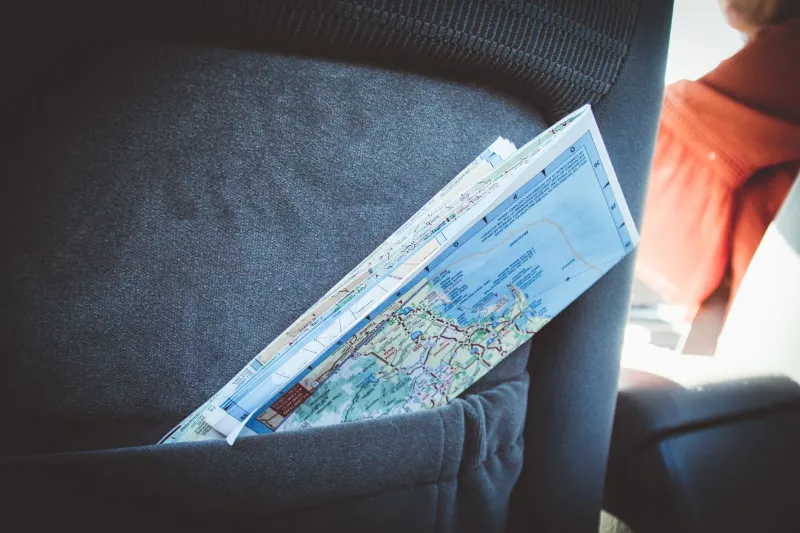
A growing number of urban hikers and "map literacy" hobbyists have started practicing deliberate navigation: choosing a destination, studying a paper map beforehand, then driving or walking without any digital assistance. They report that even a few weeks of this practice changes how they experience familiar places. Streets they'd driven for years suddenly have texture again.
Some memory coaches recommend a technique called route anchoring — mentally attaching a visual image or story to each landmark along a familiar path. It sounds almost childishly simple, but it's essentially the same technique ancient Greek orators used to memorize hours-long speeches. The human brain, it turns out, was never designed to follow a blue line. It was designed to tell stories about places.
Others are reviving the pre-trip ritual: spending ten minutes with a physical map before driving somewhere new, sketching the basic route by hand, then navigating from that internal picture. It's slower, occasionally wrong, and — by most accounts — far more memorable.
Why It Might Be Worth the Inconvenience
Nobody's suggesting you throw your phone out the window on the way to an unfamiliar airport. GPS is genuinely useful, and there's no romance in getting lost when you're late.
But there's a real difference between using a tool when you need it and surrendering a cognitive ability because the tool is always available. Your great-grandparents didn't navigate by memory because they were tougher or more disciplined. They did it because nobody had handed them an easier option yet — and in doing so, they maintained a relationship with their physical world that we've largely traded away for convenience.
The next time you're driving somewhere you've been a hundred times, try turning the screen off and just knowing the way. You might be surprised what you remember. And you might notice, for the first time in years, what's actually out the window.