The Evening Walk That Built America: The Lost Practice of Knowing Your Block

Photo by Photo by Land O'Lakes, Inc. on Unsplash on Unsplash
Somewhere between the invention of the television and the rise of the automobile, Americans stopped walking their neighborhoods in the evening — and they lost something they didn't even realize they had.
It wasn't just fresh air. It wasn't just exercise. The evening neighborhood walk, once so common it had a formal name — the constitutional — was quietly one of the most sophisticated community-intelligence systems ever invented. And almost nobody talks about it anymore.
What a "Constitutional" Actually Was
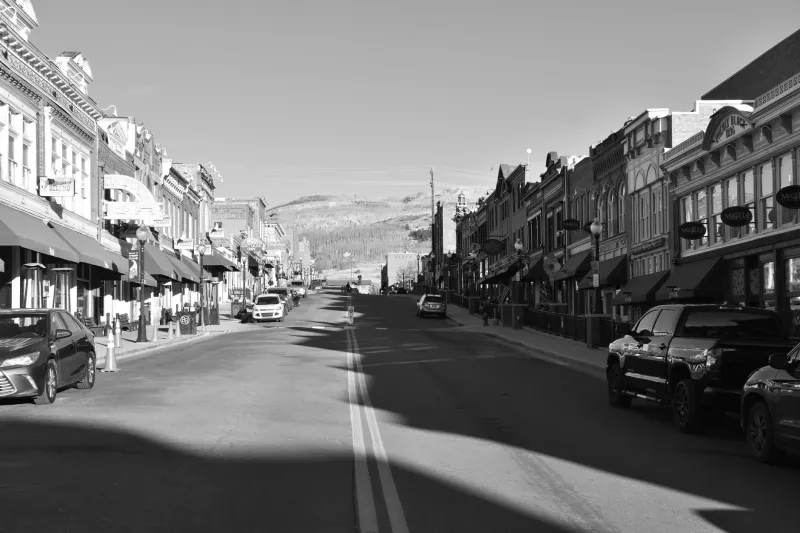
The term sounds almost comically old-fashioned now. But in the 19th and early 20th centuries, taking your constitutional was a serious daily habit practiced across American towns and cities, from rural Ohio farming communities to the brownstone neighborhoods of Brooklyn.
The idea was simple: you walked a consistent, deliberate route through your immediate surroundings, usually in the late afternoon or after the evening meal. You didn't rush. You paid attention.
But here's the thing most history books miss — this wasn't passive leisure. These walks were information-gathering rituals. People were reading their environment with a level of attention that would impress any modern data analyst.
A farmer walking his block noticed which neighbor's field was struggling. A merchant on his evening route spotted which storefronts were dark two nights running — a signal that a business might be failing, or that a family needed help. A mother walking with her children catalogued which yards were tended, which were not, and what that meant about the families inside.
The Weather, the Weeds, and the Word on the Street
Before the Weather Channel, before neighborhood Facebook groups, before Nextdoor sent you notifications about suspicious-looking strangers, the evening constitutional was the local information network.
Regular walkers developed what you might call hyperlocal situational awareness. They tracked subtle environmental shifts — the way a particular corner always flooded before a big rain, the direction smoke drifted from chimneys that predicted tomorrow's wind, the early signs of a pest problem spreading through gardens on the south end of the block.
This wasn't superstition. It was accumulated pattern recognition, built through repetition and consistency. The same walk, taken day after day, turned ordinary neighbors into something closer to community monitors.
And socially? The intelligence gathered was just as rich. You knew which families were struggling because the curtains stayed drawn. You knew a new business was coming because materials were being delivered on Wednesday evenings. You knew who was feuding with whom because two neighbors who used to wave had stopped making eye contact.
None of this required a single conversation. The walk itself told the story.
The Science That Finally Caught Up
Here's where things get genuinely surprising. Researchers studying community cohesion and urban health outcomes have spent decades trying to figure out why certain neighborhoods hold together better than others — why some blocks have lower crime, stronger mutual aid networks, and residents with measurably better mental health.
One consistent factor keeps appearing in the data: pedestrian activity.
A landmark study out of Columbia University found that neighborhoods with higher rates of regular foot traffic — specifically residents walking familiar routes — showed significantly stronger "weak tie" social networks. Weak ties are the casual connections between acquaintances: the nod to the guy who's always watering his roses, the wave to the woman who walks her beagle at 5:30 every evening. These connections feel trivial. They are anything but.
Researchers have found that weak tie networks are often more useful than close friendships when it comes to finding jobs, getting practical help during emergencies, and maintaining a sense of belonging. Your close friends usually know the same things you know. Your acquaintances — the ones you built relationships with simply by walking past them regularly — know things you don't.
Your great-grandparents were building these networks every evening, without a single app.
Why the Car Killed the Constitutional
The decline is almost heartbreakingly logical. As car ownership spread through the 1940s and 1950s, American neighborhoods were redesigned around vehicles rather than pedestrians. Sidewalks disappeared in newer suburbs. Streets widened. Distances between destinations grew too large to walk comfortably. The garage moved from the back of the house to the front, replacing the porch as the dominant architectural feature — and the porch had been the constitutional's natural endpoint, the place where walkers stopped to debrief with neighbors.
Television did the rest. By the 1960s, the evening hours that had once belonged to the neighborhood now belonged to the living room screen.
The constitutional didn't die dramatically. It just quietly faded, taking with it a form of community knowledge that had no obvious replacement.
What You Can Still Do With This
The good news is that the technique hasn't expired. A handful of urban planners and community organizers have started quietly reviving the idea under different names — "neighborhood observation walks," "block literacy" programs — and reporting surprisingly powerful results in communities trying to rebuild connection after years of isolation.
You don't need a program or a group. You just need consistency and attention.
Pick a route. Walk it at the same time, as many evenings as you can manage. Don't stare at your phone. Notice what's different from last week. Notice who waves. Notice what's been repaired and what's been neglected.
Within a few weeks, something shifts. The neighborhood stops being a backdrop to your commute and becomes something you actually know. And the people in it — the ones who are also out there, walking — start to become something more than strangers.
Your great-grandparents could have told you this. They walked it every evening, right up until the moment the whole country forgot why.