A Man's Word and a Slap of the Hand: The Unwritten Code That Moved Millions of Cattle Across America
A Man's Word and a Slap of the Hand: The Unwritten Code That Moved Millions of Cattle Across America
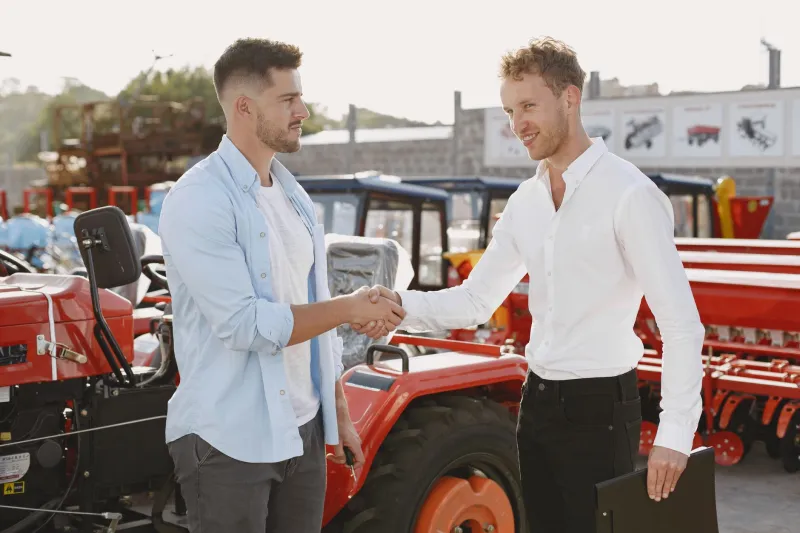
Picture this: two men standing in the dust of a Kansas stockyard, somewhere around 1890. One has just agreed to sell six hundred head of cattle. The other has just agreed to buy them. The price has been negotiated, the terms understood. They shake hands — sometimes with a sharp slap of the palm, sometimes with a grip that barely lasts two seconds — and that's it. Deal done.
No contract. No lawyer. No notarized document. Just a handshake and the weight of a man's reputation pressing down on both sides of the transaction.
And here's the part that should genuinely surprise you: it worked. For more than a century, across hundreds of thousands of transactions involving millions of dollars' worth of livestock, this system held together with a reliability that would embarrass many modern legal agreements.
The Stockyard as Social Institution
The great American livestock markets — Chicago's Union Stock Yards, the Kansas City Stockyards, Fort Worth's complex along the Trinity River — weren't just commercial spaces. They were social ecosystems with their own unwritten constitutions.
 Photo: Fort Worth, via www.shutterstock.com
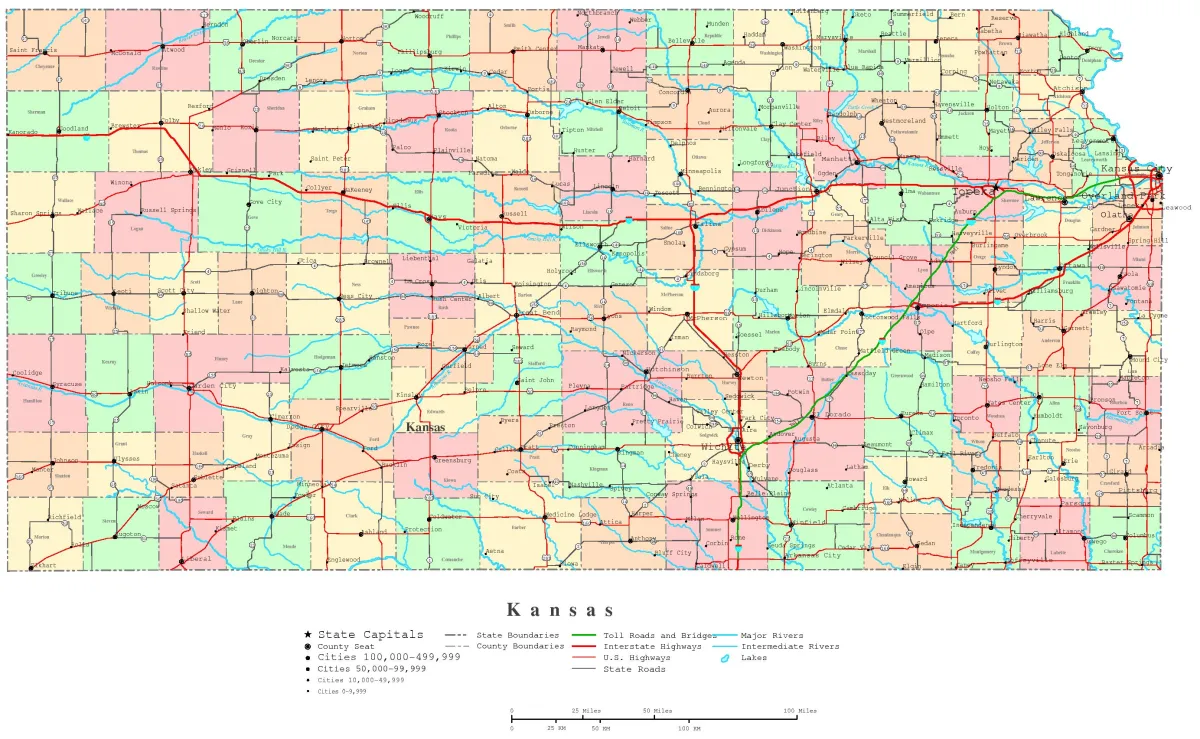 Photo: Kansas City Stockyards, via www.yellowmaps.com
 Photo: Union Stock Yards, via bartzimmobilien.de
Traders who worked these yards regularly knew each other's histories. They knew who had honored a deal under pressure and who had tried to wriggle out of one. They knew whose word meant something and whose required watching. Reputation wasn't a soft, abstract concept here. It was currency, and it depreciated fast if you spent it carelessly.
A buyer who shorted a seller, even by a small amount, didn't just lose that one relationship. He lost access to the informal network that made the whole market function. Word spread faster than any newspaper could print it. By the time you drove home from a bad deal, the man you'd wronged had already talked to six people who mattered.
The Rules Nobody Wrote Down
What's fascinating about this system is how consistent the unwritten rules were across different regions and different decades. Researchers and historians who have interviewed livestock traders from the mid-20th century describe a code that was remarkably stable.
A deal struck verbally at a sale barn in Nebraska followed essentially the same honor protocol as one made at a Texas ranch gate or a Tennessee county fair. You didn't back out after a handshake because the price moved in your favor overnight. You didn't claim you'd misunderstood the terms when the cattle arrived thinner than expected. And if a genuine dispute arose — which it did, occasionally — it was almost always settled through a third party whose judgment both men respected, not through a courthouse.
That third-party role was typically played by a livestock auctioneer or a well-known commission man, figures who occupied a quasi-judicial status in the community. Their rulings weren't legally binding. They didn't need to be. Social enforcement was more effective than legal enforcement, because the consequences of defying community judgment were immediate and lasting.
Why It Rarely Collapsed
Economists who study informal contract systems have a term for what kept the livestock trade honest: "relational contracting." The idea is that when two parties expect to deal with each other — or with each other's networks — repeatedly over time, the long-term value of maintaining a good reputation almost always outweighs the short-term gain from cheating on any single deal.
The livestock world was a textbook case. These weren't anonymous transactions between strangers who'd never meet again. They were recurring exchanges inside a tightly networked community where everyone's behavior was visible to everyone else. The social cost of a broken handshake wasn't abstract. It was concrete and swift.
There was also something else at work: a genuine cultural pride in being a man whose word was bankable. Older traders interviewed in oral history projects from the 1970s and 80s speak about this with an intensity that goes beyond practicality. Honoring your word wasn't just strategically smart. It was identity. It was how you understood yourself.
The Slow Erosion
The handshake economy didn't disappear all at once. It eroded gradually as the livestock industry consolidated, as transactions grew larger and more complex, and as the tight-knit community networks that had enforced informal contracts began to dissolve.
By the 1970s, formal written contracts had become standard for major transactions. By the 1990s, the old stockyards themselves were largely gone — replaced by direct-to-packer arrangements and computerized bidding systems that could process thousands of animals without two men ever looking each other in the eye.
Something was gained in efficiency. Something else was quietly lost.
What It Tells Us Now
It's tempting to romanticize the handshake economy, and there are good reasons to be careful about that. The system had real exclusions — it was largely closed to women, to Black traders who faced structural barriers in these markets, and to anyone who lacked the social capital to enter the network in the first place.
But the underlying mechanism it relied on — social accountability enforced through community visibility — is something that modern commerce has spent decades trying to replicate digitally and mostly failing to fully capture. Star ratings and online reviews are the distant descendants of stockyard reputation. They work, sort of. But they don't carry the same weight as looking a man in the eye and knowing that his entire professional community is watching what happens next.
The cattle traders weren't running a primitive system that progress replaced. They were running a sophisticated trust infrastructure that progress dismantled before anyone fully understood what it was.
Sometimes a handshake contains more enforceable contract than a dozen pages of fine print.