Built to Make You Talk: The Invisible Social Engineering Hidden in Old American Towns
Somewhere between the invention of the front porch and the rise of the two-car garage, Americans stopped running into each other. Not because they wanted to — but because someone, slowly and without much fanfare, redesigned the spaces around them to make isolation the default.
What most people don't realize is that the opposite was also true. For generations, the physical layout of small American towns wasn't just practical. It was quietly, almost accidentally, engineered to force human contact. And the results were remarkable.
The Water Pump Was Never Just About Water
In towns across 19th-century America, the communal water pump wasn't a backup plan for homes that lacked plumbing. It was the social nucleus of the neighborhood. Every household needed water. That meant every household showed up — morning and evening, buckets in hand, often at the same time.
You couldn't collect your water in silence for long. Someone's kid was always underfoot. Someone's grandmother always had an opinion about the weather. The pump became the original town square, and the daily ritual of gathering there created something urban planners now call "third place" infrastructure — spaces that are neither home nor work, where community forms on its own without anyone organizing it.
The same logic applied to communal wash houses, which were common in working-class neighborhoods well into the early 20th century. Women gathered weekly to do laundry together, and those hours of shared labor produced something beyond clean clothes. Gossip, yes — but also childcare arrangements, job leads, crisis support, and the low-level social glue that held neighborhoods together when things got hard.
Nobody called it a mental health strategy. It just worked.
The Sidewalk That Wouldn't Let You Disappear
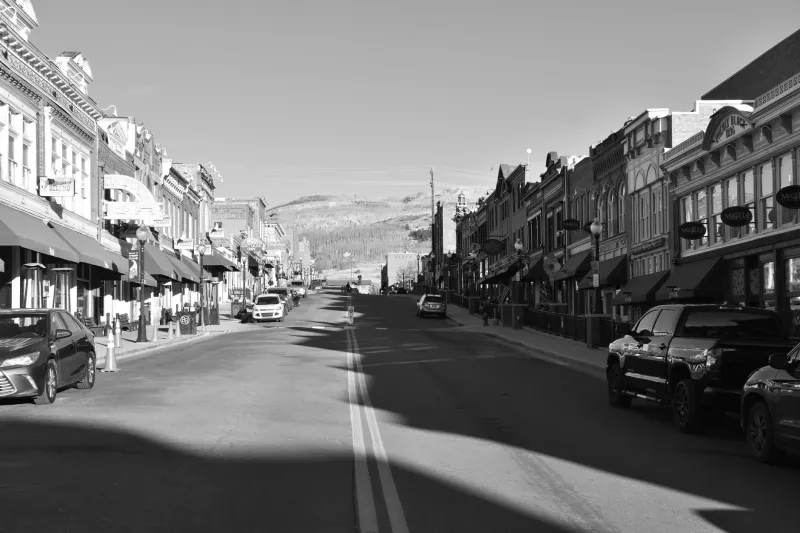
Here's a detail that sounds almost too deliberate to be true: in many older American towns, the sidewalks were built narrow on purpose. Not because materials were scarce, but because narrow sidewalks forced pedestrians into closer physical proximity. You couldn't walk past someone without acknowledging them. The spatial design made invisibility uncomfortable.
Compare that to the wide, open sidewalks of many modern suburban developments — or the absence of sidewalks entirely — and the contrast becomes stark. Modern design, almost by accident, optimized for privacy. Older design, almost by accident, optimized for contact.
Front stoops and porches played a similar role. Houses in older neighborhoods were built close to the street, with porches that faced outward. Sitting on your porch in the evening wasn't just a way to catch a breeze. It was participation in neighborhood life. You watched who came and went. You waved. You got pulled into conversations you hadn't planned on having. The architecture made community the path of least resistance.
What Got Lost When We Started Driving
The shift away from walkable, interaction-dense neighborhoods didn't happen because Americans suddenly wanted to be alone. It happened because of cars, zoning laws, and a postwar housing boom that prioritized speed and square footage over social texture.
Subdivisions built in the 1950s and 60s moved garages to the front of homes, effectively replacing the porch as the face of the house. Backyards became private retreats. Cul-de-sacs reduced through traffic — and, unintentionally, reduced the number of people you'd ever see walking past your home. The result, as sociologists have spent decades documenting, was a steady erosion of casual neighborly contact.
Robert Putnam's landmark 2000 book Bowling Alone put hard numbers to what many people already felt: Americans were joining fewer clubs, attending fewer community events, and reporting fewer close friendships than any previous generation measured. The spaces that once produced community organically had been replaced by spaces that required effort to fight your way back into.
 Photo: Robert Putnam, via www.ancientpages.com
The Quiet Comeback
Here's where it gets interesting. A growing movement in urban planning — sometimes called "tactical urbanism" or "human-scale design" — is essentially rediscovering what those old town layouts already knew.
Cities like Detroit, Chattanooga, and Tucson have been experimenting with narrowing certain streets, adding communal seating, and creating shared outdoor spaces that function as modern equivalents of the old water pump. The goal isn't nostalgia. It's engineering the conditions for spontaneous human contact, because the research now confirms what those earlier communities intuited: connection doesn't happen because people decide to connect. It happens because the environment makes it easy.
Small towns in Vermont and the Carolinas have started restoring front-porch culture deliberately, hosting neighborhood porch-sitting nights that sound almost comically low-tech — until you read the data showing that participants report significantly lower feelings of isolation afterward.
The Lesson Nobody Wrote Down
The remarkable thing about all of this is that nobody in a 19th-century Ohio river town sat down and said, "Let's design our streets to combat loneliness." They just built things to be functional, and function turned out to require proximity.
We've spent the last seventy years building spaces that accidentally made people invisible to each other. The good news is that the fix might not require a wellness app or a community initiative with a logo. It might just require a narrower sidewalk and a porch that faces the street.
Sometimes the most sophisticated social technology is the one that looks like it isn't doing anything at all.