What Appalachian Grandmothers Knew About Clay That Modern Nutritionists Are Just Figuring Out
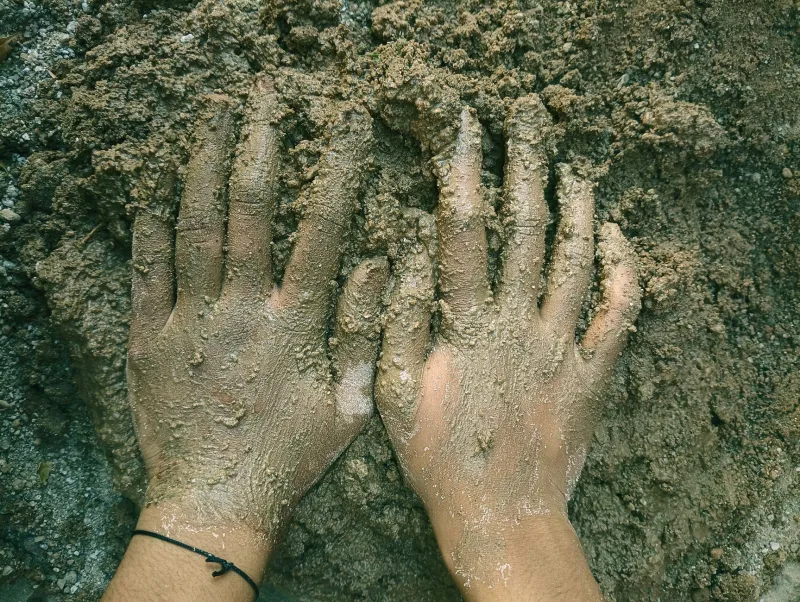
There's a particular kind of clay found in the red-dirt counties of Georgia and Alabama that, if you ask the right people in the right hollows, still gets pulled from the earth, dried in the sun, and eaten in small pieces. Not as a dare. Not as a curiosity. Just quietly, the way you might take a vitamin.
This practice has a formal name — geophagy, from the Greek words for earth and eating — but the people who practiced it never called it anything special. It was simply something you did. And for centuries across rural America, particularly in Appalachian mountain communities and the Deep South, it was far more widespread than most history books ever bothered to record.
A Tradition That Crossed Oceans and Centuries
Geophagy didn't originate in America. It's one of the oldest documented human behaviors on the planet, with evidence stretching back to ancient Rome, Sub-Saharan Africa, and Indigenous communities across the Americas long before European contact. When enslaved Africans were brought to the American South, many carried the practice with them — a thread of cultural memory woven into survival.
Across Indigenous communities in the Southeast, certain clays were traded, gifted, and used medicinally long before colonization. The Cherokee, for instance, had specific relationships with particular earths used during illness and pregnancy. These weren't random cravings. They were deliberate choices passed down through generations of careful observation.
By the 19th century, the practice had become embedded in the folk traditions of rural Appalachian and Southern communities, cutting across racial lines in ways that much of American social life did not. White and Black sharecroppers' wives, mountain families, and rural laborers all participated, often in small, private ways that rarely made it into official records.
What People Were Actually Eating
Not all dirt is created equal, and the people who practiced geophagy understood this intuitively. The clays most commonly consumed were kaolin-rich — smooth, fine-grained, and pale in color. White Georgia clay was particularly prized. It had a specific chalky texture and a neutral, almost mineral taste. People described eating it in small amounts, often craving it during pregnancy or when feeling generally depleted.
County stores in parts of Georgia and Mississippi once quietly sold bags of this clay alongside cornmeal and molasses. Chunks of it were wrapped in brown paper or kept in small tins. It wasn't hidden, exactly, but it also wasn't advertised. It existed in that category of ordinary things that communities simply understood without needing to explain to outsiders.
The practice was most commonly associated with pregnant women, a fact that turns out to be scientifically interesting. Pregnancy dramatically increases the body's demand for minerals like calcium, iron, and zinc. A depleted body will sometimes generate cravings that, in retrospect, make a strange kind of sense.
When Medicine Decided It Was a Problem
By the early 20th century, as germ theory reshaped American medicine and public health campaigns pushed rural communities toward modern habits, geophagy got quietly classified as a disorder. The medical establishment labeled it a symptom of iron deficiency anemia, poverty, or psychological disturbance — something to be corrected rather than understood.
The shame that followed was real. Practices that had existed openly for generations went underground. Families stopped talking about it. The knowledge of which clays were safe, how much to eat, and what purposes they served began to fade with the generations that held it.
What medicine largely failed to ask was the more interesting question: why had this practice persisted across so many cultures and centuries if it offered nothing?
The Science That's Quietly Catching Up
Here's where the story gets genuinely surprising. Researchers who've spent the last few decades studying geophagy from an anthropological and nutritional standpoint are finding that the folk wisdom embedded in the practice was not entirely wrong.
Kaolin clay, the variety most commonly consumed in American geophagy traditions, has demonstrated a measurable ability to bind certain toxins and pathogens in the digestive tract. You may have actually encountered a pharmaceutical version of it without knowing — kaolin was a primary ingredient in the original Kaopectate formula used to treat stomach upset and diarrhea for much of the 20th century.
Beyond its binding properties, certain clays do contain trace minerals. The bioavailability of those minerals — meaning how much the human body can actually absorb — is still being studied, but the baseline finding that these earths aren't nutritionally inert has surprised more than a few skeptical researchers.
A landmark study published in the Quarterly Review of Biology by Cornell researchers Cornell University's Paul Sherman and Samuel Flaxman analyzed geophagy across 457 cultures worldwide and found that it was most commonly practiced during the first trimester of pregnancy, when the embryo is most vulnerable to food-borne pathogens. Their theory: the clay functioned as a natural shield, binding harmful compounds before they could cause damage. Not a disorder. A protective behavior.
What Gets Lost When We Stop Listening
The story of geophagy in America is, in many ways, a story about whose knowledge gets taken seriously. The women who ate white clay in rural Georgia weren't doing it because they didn't know any better. They were doing it because something in their experience — passed down through generations, refined through observation — told them it helped.
That kind of knowledge rarely survives contact with institutional medicine when the institution has already decided the behavior is primitive. The dismissal was quick and the recovery has been slow.
Today, a small but growing number of nutritional researchers, anthropologists, and even some integrative medicine practitioners are revisiting the question with fresh eyes. The answers they're finding are complicated, nuanced, and far more respectful of the original practice than anything the 20th century managed.
Maybe that's the real discovery here — not that eating clay is something we should all start doing, but that the people who kept this quiet tradition alive for centuries weren't confused. They were paying attention to something real, in the way that careful observers always do, long before the instruments existed to measure what they already knew.