Zip Code Rebels: The Small American Towns That Refused to Be Reduced to Five Numbers
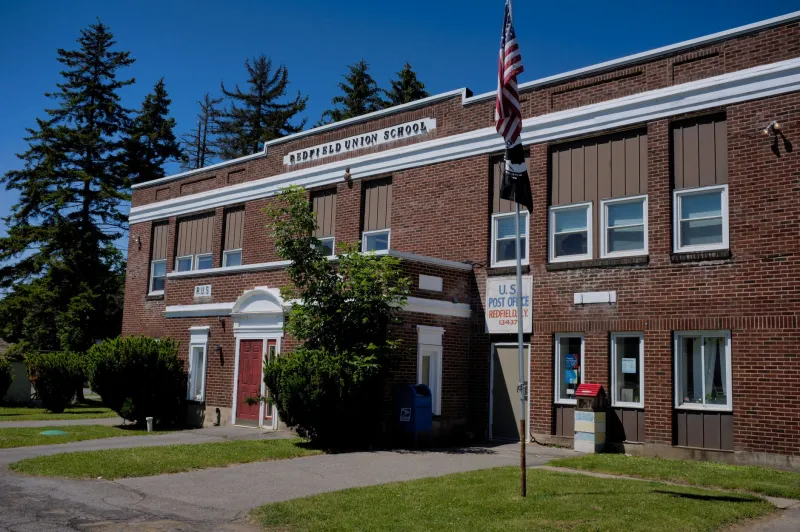
In the summer of 1963, the United States Postal Service launched one of the more ambitious administrative projects in American history: a nationwide numbering system designed to sort the country's exploding volume of mail with mechanical efficiency. They called it the Zone Improvement Plan. Most people just called it the zip code.
The rollout was smooth. Most Americans accepted the change the way they accepted most government paperwork — with mild annoyance and eventual compliance. But in pockets of rural America, something unexpected happened. People pushed back. Not loudly. Not with protests or legislation. Just with the quiet, stubborn refusal that small towns have always been better at than anyone gives them credit for.
Five Numbers and a Whole Lot of Feelings
To understand why some communities bristled at zip codes, you have to understand what a mailing address meant before they existed.
For most of American history, your address wasn't a number at all — it was a name. A place. You wrote "John Miller, Millbrook, Virginia" on an envelope and trusted that the postmaster in Millbrook knew exactly who John Miller was, where he lived, and whether he'd been feuding with his neighbor long enough that you should probably leave out a return address. The postal system ran on local knowledge, and local knowledge was a form of community identity.
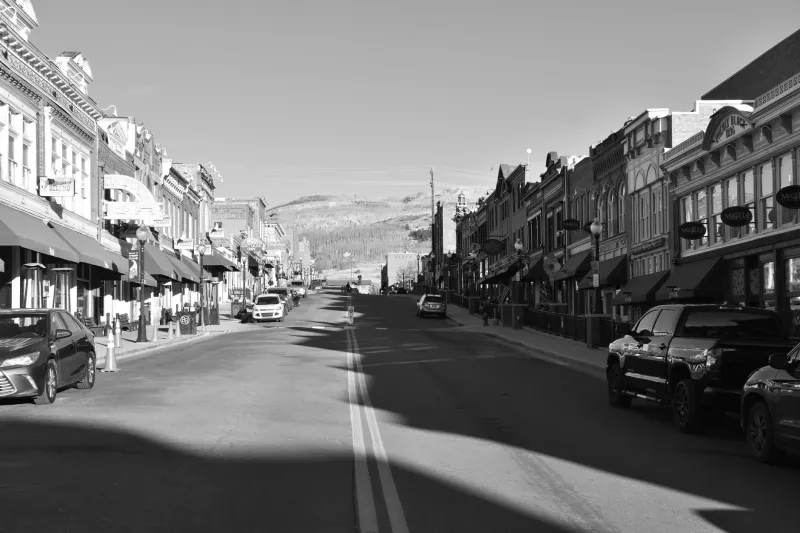
 Photo: Millbrook, Virginia, via thespringteam.ca
A zip code collapsed all of that into a sorting algorithm. Suddenly, Millbrook wasn't Millbrook — it was 22514, a designation shared with surrounding rural routes and defined by postal geometry rather than any human sense of where one community ended and another began. For people who had lived their whole lives in places defined by name and relationship, the change felt like something was being taken.
The Postmaster Who Wouldn't Play Along
The resistance wasn't always organized, but it was real. In small post offices across Appalachia, the rural South, and the mountain West, postmasters — many of them fixtures of their communities for decades — were slow to enforce the new system. Some continued routing mail by name and town long after the USPS had officially switched over, relying on the same institutional memory that had always made small-town mail delivery work.
There are accounts from postal historians of rural postmasters in the mid-1960s who quietly maintained their own internal systems, using zip codes only for outgoing mail that needed to move through larger sorting facilities, while continuing to handle local delivery the old way. It wasn't rebellion exactly. It was more like passive insistence that the new system hadn't actually replaced anything that mattered.
Some communities went further. Local newspapers in rural counties published editorials arguing that the zip code system created artificial boundaries that cut across long-established community lines — lumping neighboring towns together under one number when those towns had distinct histories, distinct identities, and in some cases, a generations-old rivalry that made the postal service's geographic indifference feel almost offensive.
What's in a Number? More Than You'd Think
The deeper argument wasn't really about mail sorting. It was about who gets to define a place.
Small American towns have always fought hard for the markers of their own existence — their own post office (a battle many lost in the rural consolidation waves of the 20th century), their own school, their own zip code. Losing a post office was often the first sign that a town was being administratively erased, folded into a larger nearby community for purposes of federal accounting. The zip code fight was, in many ways, a continuation of that same anxiety.
Communities that managed to secure their own distinct zip code — separate from the larger town nearby — often treated it as a genuine victory. It meant the federal government, at least for postal purposes, acknowledged that this place existed as its own thing. It showed up on maps. It appeared in databases. It was real in the way that bureaucratic systems make things real.
Conversely, communities that got absorbed into a neighboring zip code sometimes found that the psychological effect was real and cumulative. Over time, the neighboring town's name appeared on return addresses. Businesses listed that town in their location data. The absorbed community gradually became, in the official record, a neighborhood of somewhere else — even if the people who lived there never stopped thinking of it as its own place.
The Identity Hidden in Your Zip Code
What the zip code resisters understood intuitively, and what researchers have since documented, is that place names carry social and psychological weight that numbers simply don't. There's a reason real estate listings in big cities still advertise neighborhood names — Wicker Park, Capitol Hill, the Garden District — even when those names have no official status. People organize their identities around named places in ways they never will around five-digit codes.
 Photo: Capitol Hill, via wallpapers.com
Some of the communities that pushed back hardest against zip code consolidation in the 1960s and 70s were the same ones that later fought to keep their local post offices open, their school districts independent, their community names on highway signs. The zip code battle was one front in a longer war about whether small places would be allowed to remain distinct, or whether administrative efficiency would eventually flatten everything into interchangeable units.
The Number That Knows Your Neighborhood
Today, zip codes have taken on a life their designers never intended. They're used to determine insurance rates, target advertising, measure health outcomes, and sort people into demographic categories with an accuracy that would have seemed remarkable in 1963. The five digits that were supposed to be a neutral mail-sorting tool have become one of the most powerful proxies for class, race, and opportunity in American life.
The small-town resisters who worried that reducing a place to a number would change what that place meant weren't wrong. They were just ahead of the curve on understanding what the number would eventually be used for.
Millbrook is still Millbrook. But it's also 22514. And those two things are not quite the same.