When Smoke Signals Were Science: The Lost American Art of Reading the Sky for Survival
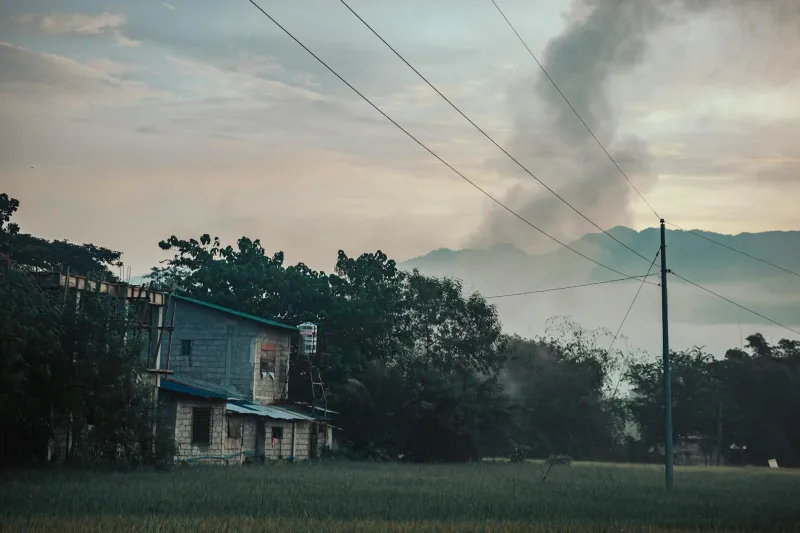
Walk through any American suburb today, and you'll see chimneys puffing white steam into winter air without anyone giving it a second glance. But step back 150 years, and that same smoke carried a wealth of information that could mean the difference between life and death.
Rural Americans once possessed an almost supernatural ability to read smoke like a book. They could tell you whether Mrs. Henderson three farms over was cooking breakfast or burning trash, predict incoming weather by watching distant chimney plumes, and spot wildfires hours before they became visible to the untrained eye.
The Language Written in Air
This wasn't mystical nonsense — it was practical science born from necessity. In an era before telephones, weather services, or organized fire departments, smoke reading became an essential survival skill passed down through generations of farmers, ranchers, and frontier families.
The basics started with chimney smoke. Thin, straight columns indicated clear, stable weather ahead. When smoke began to flatten and spread horizontally, experienced readers knew a storm system was approaching within 12 to 24 hours. Smoke that twisted and danced erratically often preceded sudden wind shifts that could turn a controlled field burn into a disaster.
But the real artistry came in reading wildfire smoke. Experienced smoke readers could determine not just the location and size of a distant fire, but its direction, speed, and likely behavior. White smoke meant the fire was burning grass or dry leaves — fast-moving but manageable. Dark, rolling smoke indicated timber or structures burning, suggesting a serious blaze that demanded immediate attention.
Beyond Weather: Communication Across the Frontier
Some communities developed informal smoke signaling systems that rivaled any telegraph network. Farmers would burn specific materials at designated times to communicate basic messages across valleys and plains. A sustained column of thick black smoke might indicate medical emergency, while intermittent puffs could signal all-clear after a threat had passed.
These weren't the romanticized smoke signals of Hollywood westerns, but practical communication networks born from isolation and necessity. Ranch families separated by dozens of miles could coordinate roundups, warn of predators, or request assistance using nothing more than controlled burns and careful timing.
The Science Behind the Skill
Modern meteorologists now understand that these folk observations were remarkably accurate. Smoke behavior does indeed reflect atmospheric pressure changes, humidity levels, and wind patterns that precede weather shifts. What seemed like rural superstition was actually sophisticated atmospheric science practiced by people who lived their lives outdoors.
The density and color of smoke revealed precise information about combustion temperatures, moisture content, and fuel types. Experienced readers could distinguish between oak and pine burning from miles away, determine whether a fire was oxygen-starved or well-ventilated, and predict its likely spread pattern based on subtle changes in smoke column behavior.
Why the Skill Vanished
The decline of smoke reading paralleled America's urbanization and technological advancement. Weather services, telephone networks, and professional fire departments gradually replaced the need for individual families to monitor their environment so intensively. By the 1950s, most Americans had moved to cities where chimney smoke was just pollution, not communication.
Central heating systems eliminated the constant fires that once provided daily practice in smoke observation. Suburban neighborhoods with their manicured lawns and fire regulations offered little opportunity to develop or maintain these skills. Within two generations, knowledge that had been essential for centuries became as obsolete as churning butter or shoeing horses.
The Quiet Revival
Today, a small but dedicated community of wilderness survival instructors, wildfire fighters, and outdoor enthusiasts is working to revive these nearly lost skills. They argue that smoke reading offers insights that modern technology can't replicate — immediate, local environmental awareness that no weather app can provide.
Survival schools across the American West now include smoke reading modules in their curricula. Students learn to distinguish between different fuel types, interpret atmospheric conditions, and understand fire behavior through careful observation of smoke patterns. Some wildfire management agencies have begun incorporating traditional smoke reading techniques into their training programs, recognizing that indigenous and folk knowledge often provides crucial insights missing from technological approaches.
 Photo: American West, via greatamericanwest.co
Reading the Signs Today
While few modern Americans need to predict weather by watching chimney smoke, the underlying principles remain surprisingly relevant. Hikers and campers who understand smoke behavior can better assess wildfire risks during outdoor adventures. Homeowners in fire-prone regions can gain early warning of approaching dangers by observing distant smoke columns.
The skill also offers something our hyperconnected world often lacks: direct, unmediated connection to our immediate environment. In an age of weather apps and emergency alerts, there's something deeply satisfying about reading atmospheric conditions through your own careful observation.
Perhaps most importantly, smoke reading represents a broader category of environmental literacy that modern Americans have largely abandoned. Our ancestors developed intimate knowledge of their surroundings because survival depended on it. While we may not face the same immediate threats, recovering some of that awareness might make us more observant, more connected, and ultimately more prepared for whatever challenges the sky might bring.