When Main Street Printed Its Own Money: The Small Town Currency Experiments That Actually Worked
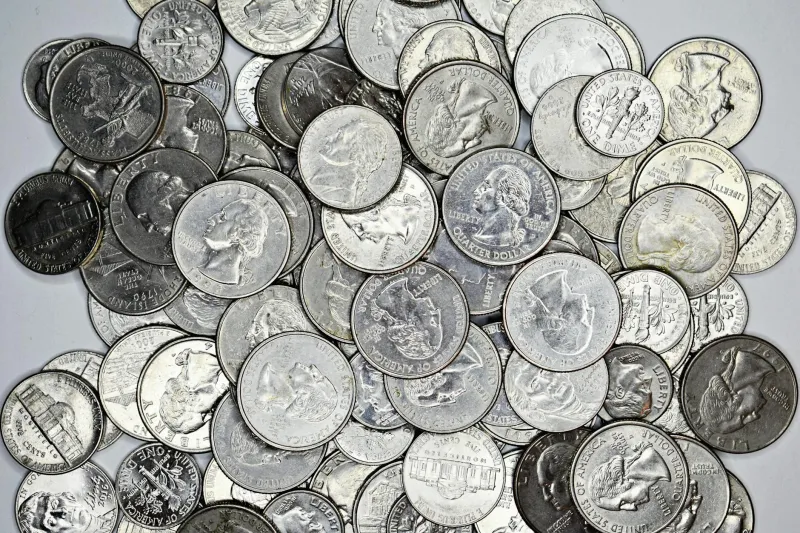
While economists debate monetary policy in Washington, a handful of American communities have been quietly running their own successful currency experiments for decades. These aren't cryptocurrency startups or libertarian fever dreams — they're practical solutions that emerged when regular money simply stopped flowing through local economies.
The Town That Saved Itself with Wooden Nickels
In 1932, as the Great Depression strangled commerce across America, the small town of Tenino, Washington faced a crisis. The local bank had failed, federal dollars had vanished from circulation, and businesses were closing daily. Rather than wait for distant bureaucrats to solve their problems, the town council made a radical decision: they would print their own money.
 Photo: Tenino, Washington, via teninoacc.org
Using a printing press from the local newspaper, Tenino issued currency printed on thin wooden discs — literal "wooden nickels" in denominations of 25 cents, 50 cents, and one dollar. The money was backed by the town's promise to accept it for tax payments and municipal services.
The result was immediate and dramatic. Local commerce resumed almost overnight. Businesses that had been operating on pure barter suddenly had a medium of exchange again. The wooden currency circulated so successfully that Tenino not only survived the Depression but actually thrived while neighboring towns struggled.
The Science of Local Money
What made these experiments work wasn't magic — it was basic economics. Local currencies create what economists call a "velocity multiplier effect." Unlike federal dollars that might leave town immediately when spent, local currency stays within the community by design, circulating multiple times before eventually being converted back to regular money.
Studies of Depression-era local currencies show they generated economic activity at rates 2-3 times higher than equivalent amounts of federal currency. A dollar of local currency might change hands five or six times within the community before leaving, compared to federal dollars that often departed after a single transaction.
The Ithaca HOURS Revolution
Fast-forward to 1991, when Paul Glover launched "Ithaca HOURS" in Ithaca, New York. This modern local currency operated on a simple principle: one HOUR equaled one hour of basic labor, roughly $10 in federal currency.
 Photo: Paul Glover, via www.wallofcelebrities.com
 Photo: Ithaca, New York, via c8.alamy.com
Businesses throughout Ithaca began accepting HOURS for everything from restaurant meals to medical services. The currency included sophisticated anti-counterfeiting measures and operated through a network of local coordinators who managed issuance and circulation.
At its peak, Ithaca HOURS circulated among over 500 businesses and generated millions of dollars in local economic activity. The system proved so effective that it inspired similar programs in over 100 communities across North America.
How Local Currency Actually Works
Successful local currencies follow surprisingly consistent patterns. They typically start during economic stress when conventional money becomes scarce. A core group of local businesses agrees to accept the alternative currency, creating immediate utility and demand.
The currencies usually trade at fixed exchange rates with federal dollars — Tenino's wooden nickels traded 1:1 with regular currency, while Ithaca HOURS maintained their $10 equivalency. This stability prevents the currency speculation that destroys many alternative money systems.
Crucially, successful local currencies always include a mechanism for conversion back to federal dollars, preventing them from becoming economic islands. This convertibility reassures skeptical businesses while maintaining connection to the broader economy.
The Modern Revival
Local currencies never entirely disappeared. Today, dozens of American communities operate their own monetary systems, from BerkShares in Massachusetts to Ithaca Dollars (the successor to Ithaca HOURS) to Detroit's Motor City Bucks.
These modern versions often incorporate digital technology while maintaining the core principles that made their predecessors successful. BerkShares, launched in 2006, operates through a network of local banks and has facilitated millions of dollars in transactions throughout the Berkshire region of Massachusetts.
The 2008 financial crisis sparked renewed interest in local currencies as communities sought ways to insulate themselves from global economic volatility. New programs emerged in places as diverse as Madison, Wisconsin (Community Exchange System) and Bellingham, Washington (Bellingham Bonus Bucks).
Why It Matters Now
Local currencies represent more than economic novelty — they're tools for community resilience. When external economic shocks hit, communities with established local currency systems often weather crises better than those dependent entirely on federal dollars.
The COVID-19 pandemic highlighted this resilience. Communities with local currencies could quickly mobilize economic support for struggling businesses without waiting for federal aid programs. The currencies provided immediate liquidity when conventional financing dried up.
The Lesson Hidden in Plain Sight
Perhaps the most remarkable aspect of America's local currency experiments is how they challenge fundamental assumptions about money itself. These communities discovered that currency's true power lies not in government backing or precious metal reserves, but in collective agreement about value.
When a community decides that wooden nickels or paper HOURS have value, they do. When local businesses agree to honor that value, a functioning economy emerges. The Federal Reserve's complex monetary policies matter less than neighbors trusting neighbors.
This isn't economic theory — it's practical wisdom proven in dozens of American communities over nearly a century. The next time someone insists that "real" money requires government backing, remember Tenino's wooden nickels and Ithaca's HOURS. Sometimes the most radical economic experiments happen not in university laboratories or government offices, but on Main Street, where people simply decide to trust each other enough to make their own money work.