The North Wall Secret: How Pre-War Kitchens Stayed Cold Without a Single Watt
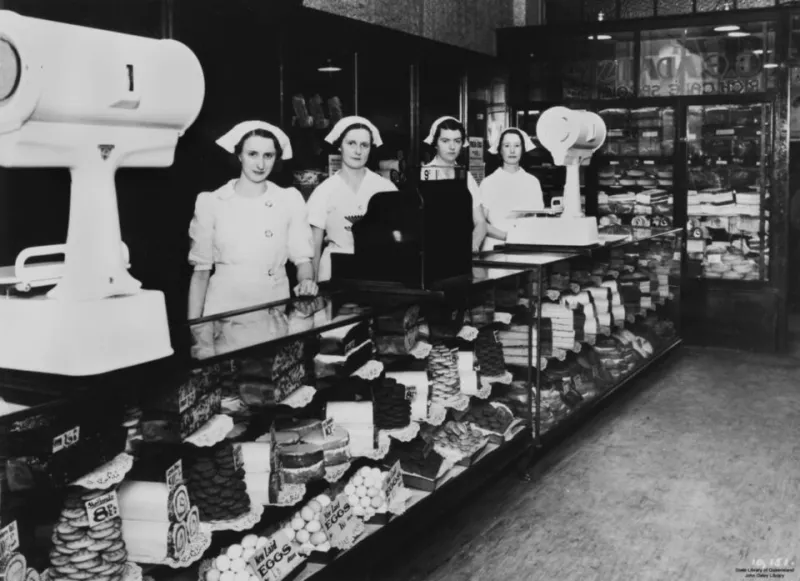
Photo: State Library of Queensland, Australia, No restrictions, via Wikimedia Commons
There's a room in most houses built before World War II that modern homeowners walk past without a second glance — and it was designed, down to its orientation and window placement, to do the job we now pay hundreds of dollars a year in electricity to do. The old American kitchen was a passive-cooling device, and the people who built it knew things about cold that most of us have completely forgotten.
The Kitchen Was Positioned Like a Chess Piece
Start with the icebox. Before electric refrigeration spread in the 1920s and '30s, food preservation happened in an insulated cabinet cooled by a huge block of ice, delivered by the iceman. That ice was expensive and it melted. So the placement of the icebox was not an afterthought — it was engineering.
Builders and homeowners put iceboxes against north-facing walls whenever possible, in the shadiest corner of the kitchen, far from the stove and away from afternoon sun. A north wall in the Northern Hemisphere gets no direct sunlight, which meant the ice melted slower and the food stayed colder. Some house plans from the era show dedicated ice doors — small exterior hatches — so the iceman could load the block from outside without tracking through the kitchen.
Once you notice this, you start seeing the whole house differently. Kitchens faced north or east. Summer kitchens, common in the South and Midwest, moved cooking heat into a separate structure so the main house stayed bearable. Nobody had a word for 'passive design.' They just knew where the cold lived.
The Meat Safe: A Cage That Outsmarted Flies
Between the icebox and the cellar sat one of the great forgotten gadgets of the American kitchen: the meat safe. Picture a ventilated cabinet wrapped in fine mesh, often with a shallow pan of water beneath its legs — the moat kept ants from climbing up. Airflow passed through the screen, evaporative cooling kept the interior a few degrees lower than the room, and the mesh kept flies off the meat.
It was food safety by physics: shade, breeze, and a moat. Farm families used versions of it well into the 1950s, long after city households had gone electric. In Australia and Britain, versions of the meat safe lasted even longer, but America had its own rich tradition, especially in farm states where butchering happened at home.
The Basement Was a Refrigerator
Then there's the root cellar — the feature that modern blueprints quietly deleted. A proper root cellar wasn't just a hole in the basement. It was built into the north side of the house or into a hillside, with a ventilation system: two channels, one high and one low, so cool air sank in through the bottom vent and warm air escaped out the top. Apples, potatoes, carrots, and cabbages could last through an entire winter in the dark, at a steady temperature, costing absolutely nothing to run.
Old farmhouse plans treated this as essential infrastructure, like plumbing. You'll find root cellars specified in farm journals, extension office pamphlets, and pattern books from the 1910s and '20s — complete with instructions for managing humidity with damp sand and straw.
Why a Century-Old Kitchen Suddenly Matters
Here's the thing about all of this: every one of these tricks is a free, zero-electricity cooling strategy, and Americans are currently paying record amounts to keep food cold and houses cool. A few of these ideas translate directly to modern life.
- Location matters. If you're placing a fridge, keep it out of the sun and away from the oven and dishwasher. A refrigerator next to a heat source can use measurably more energy.
- Evaporative cooling still works. On a dry day, a damp cloth over a basket of produce in an airy spot will outlast the same produce sealed in a warm kitchen.
- Your basement is an asset. That cool, dark corner is still the best place in the house for stored produce — no renovation required.
- Night flushing works. Opening windows on the cool side of the house at night and closing them by mid-morning is the same logic the old north-wall placement was built on.
Old Knowledge, New Utility
Nobody's suggesting you rip out your refrigerator. But there's something a little humbling about realizing that a 1930s farmwife, with no electricity bill and no thermostat, had a working theory of her kitchen's microclimate — and that theory was correct. Her kitchen worked with the physics of her climate instead of paying to overpower it.
The blueprints got edited over the decades, and the cooling knowledge got edited out with them. Maybe it's time to read the old plans again. The cold was always there. We just stopped knowing where to look for it.