Sky Gardens: The Lost American Tradition of Farming Above the Streets
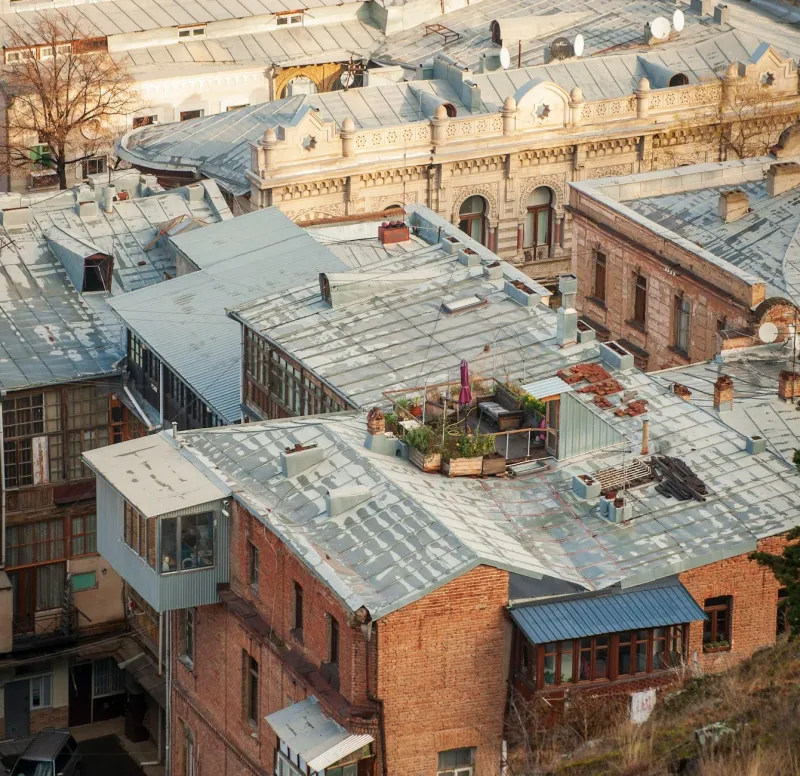
The Forgotten Farms Above the City
In 1917, a photographer climbing to the roof of a Manhattan tenement building would have found an unexpected sight: rows of tomatoes, beans, and lettuce growing in wooden boxes, tended by Italian immigrants who had recreated their countryside gardens six stories above the street. Across the city, thousands of rooftops bloomed with vegetables, herbs, and even small fruit trees in what was arguably America's first large-scale urban agriculture movement.
These weren't hobbyist gardens or modern sustainability projects. They were practical food production systems that helped feed working-class families when grocery bills consumed a significant portion of household income. Yet this remarkable chapter of American urban history has been almost completely forgotten, even as cities today struggle to reinvent the exact same solutions.
When Rooftops Fed Neighborhoods
The American rooftop farming movement peaked between 1900 and 1930, driven by economic necessity and immigrant knowledge. European and Asian immigrants brought agricultural skills to American cities, but lacked access to land. Rooftops provided the solution.
In New York's Lower East Side, entire blocks of tenement buildings sprouted coordinated gardens. Residents shared seeds, tools, and expertise across buildings, creating informal agricultural networks that operated above the urban chaos below. A single city block might produce hundreds of pounds of vegetables during the growing season.
Chicago's rooftop farms were even more ambitious. The city's flat-roofed industrial buildings provided ideal growing space, and immigrant communities from Poland, Italy, and Mexico established rooftop gardens that supplied local markets as well as family tables. Some buildings housed small livestock — chickens, rabbits, and even goats — creating complete food production systems in the sky.
The Science of Vertical Agriculture
Early 20th-century rooftop farmers developed surprisingly sophisticated techniques for urban growing. They understood that rooftops offered advantages that ground-level urban gardens couldn't match: better drainage, increased sunlight exposure, and protection from ground-level pests and pollution.
They built elaborate water collection systems using gutters and barrels to capture rainwater. They composted kitchen scraps in rooftop bins, creating fertile soil amendments. They constructed windbreaks and shade structures to protect plants from harsh urban conditions.
Some buildings featured multi-level growing systems, with tall crops like corn and beans on upper levels providing shade for lettuce and herbs below. These vertical growing techniques anticipated modern hydroponic and aquaponic systems by nearly a century.
The Business of Sky Gardens
Rooftop farming wasn't just about family food security — it was also commerce. In Philadelphia's Italian neighborhoods, rooftop gardeners sold surplus vegetables to street vendors and local restaurants. Some buildings operated as informal produce cooperatives, with residents pooling resources to buy seeds and tools in bulk.
Chicago's rooftop farms supplied the city's growing network of ethnic restaurants with specialty ingredients that weren't available through conventional food distribution. Polish restaurants got their fresh dill and cabbage from rooftop gardens. Mexican restaurants sourced peppers and herbs from building-top farms run by recent immigrants.
The economic impact was substantial. A 1925 study by the Chicago Department of Health estimated that rooftop gardens in immigrant neighborhoods produced food worth over $2 million annually — equivalent to about $30 million today.
Why the Sky Gardens Disappeared
The decline of American rooftop farming began in the 1930s and accelerated after World War II. Several factors contributed to the movement's disappearance:
Supermarket expansion made fresh produce more accessible and affordable, reducing the economic incentive for home food production.
Suburban migration meant that families with agricultural knowledge moved to areas where they could garden at ground level.
Building code changes imposed new restrictions on rooftop activities, often making small-scale agriculture impractical or illegal.
Cultural assimilation led immigrant communities to abandon traditional practices, including intensive food production, in favor of more "American" lifestyles.
By 1960, rooftop farming had largely vanished from American cities. The knowledge and techniques developed over decades of urban agriculture disappeared with the practitioners.
The Accidental Rediscovery
Today's urban farming movement is inadvertently recreating techniques and systems that American cities perfected nearly a century ago. Modern rooftop farms in Brooklyn, Detroit, and San Francisco use growing methods that would have been familiar to 1920s tenement gardeners.
The difference is scale and awareness. Contemporary urban farmers often struggle to develop techniques that previous generations had already mastered. They're solving problems — water management, soil creation, wind protection — that immigrant gardeners solved systematically decades earlier.
Some cities are beginning to recognize the historical precedent. New York's Department of Environmental Protection now promotes rooftop gardens partly as stormwater management systems, the same function they served in the 1920s when building owners encouraged gardens to reduce basement flooding.
Lessons from the Lost Gardens
The forgotten history of American rooftop farming offers practical insights for contemporary urban agriculture:
Community coordination was essential. The most successful rooftop farming happened when entire buildings or blocks worked together, sharing resources and knowledge.
Economic incentives drove innovation. Rooftop farmers developed efficient techniques because their food budgets depended on successful harvests.
Cultural knowledge mattered more than technology. Immigrants brought sophisticated agricultural understanding that adapted quickly to urban conditions.
Integration with urban systems made rooftop farms sustainable. They used city rainwater, composted urban organic waste, and supplied local food markets.
The Future Written in the Past
As American cities grapple with food security, climate change, and urban sustainability, the lost tradition of rooftop farming offers a roadmap that's already been tested at scale. The techniques worked. The economics made sense. The social systems functioned effectively.
The challenge isn't inventing urban agriculture — it's remembering how American cities once fed themselves from the sky and adapting those lessons to contemporary conditions. In a time when every urban sustainability idea feels revolutionary, it's worth noting that some of our best solutions are actually our oldest ones, waiting to be rediscovered on the rooftops where they never really left.