Why Your Ancestors Slept Twice a Night — And the Science That Says You Should Too
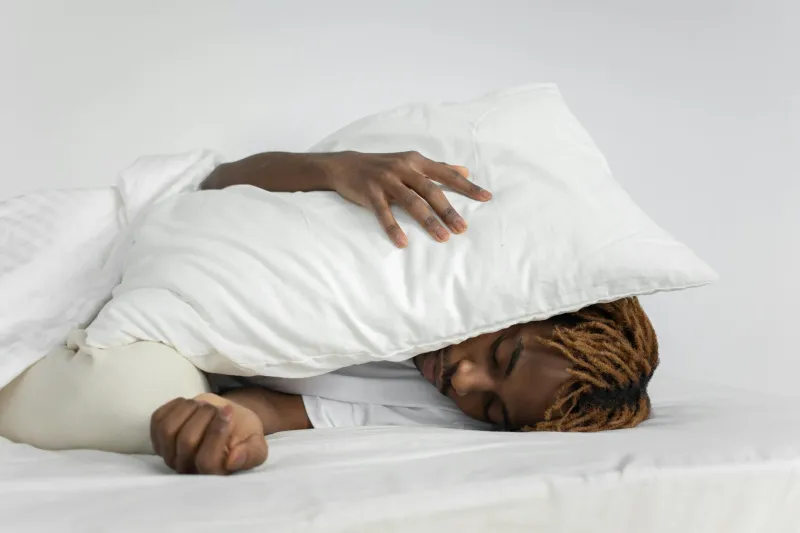
The Night That America Forgot
If you could peek into an American home in 1750, you'd witness something that would seem utterly foreign today. Around 9 PM, the family would extinguish their candles and settle into what they called "first sleep." Four hours later, they'd wake naturally, spend an hour or two in quiet conversation, prayer, or gentle household tasks, then drift back into "second sleep" until dawn.
This wasn't insomnia — it was how humans naturally slept for thousands of years.
Historian Roger Ekirch stumbled upon this forgotten pattern while researching 16th-century court records. What he found changed everything we thought we knew about sleep. Scattered across centuries of diaries, medical texts, and literature were casual references to "first sleep" and "second sleep" as if everyone understood this rhythm.
"The Devil's hour," as some called the wakeful period between sleeps, wasn't considered problematic. Colonial Americans used this quiet time for reflection, intimate conversation with spouses, or tending to the fire. Charles Dickens wrote about it. Shakespeare referenced it. Even prayer books included special devotions for the "watch" between sleeps.
When Edison Stole Our Natural Rhythm
The shift happened gradually, then suddenly. Gas lighting in the 1800s began extending evening activities, but it was Edison's incandescent bulb that truly revolutionized the night. By the 1920s, the eight-hour sleep block had become the American standard — not because science proved it was better, but because industrial schedules demanded it.
Suddenly, waking up in the middle of the night became a medical problem rather than a natural occurrence. Sleep aids flooded the market. Doctors began treating what previous generations had considered normal as a disorder requiring intervention.
We literally forgot how our ancestors slept.
The Accidental Rediscovery
In the 1990s, psychiatrist Thomas Wehr conducted an experiment that accidentally recreated pre-industrial sleep conditions. He placed volunteers in rooms with 14 hours of darkness daily — mimicking winter nights before artificial lighting.
Within weeks, every participant naturally developed the same pattern: they'd sleep for about four hours, wake for one to two hours of calm alertness, then sleep again for another four hours. Their bodies had spontaneously returned to the segmented sleep pattern that had sustained humanity for millennia.
Wehr's subjects reported feeling more rested and emotionally balanced than they had in years. The wakeful period between sleeps, they discovered, was incredibly peaceful — a meditative state unlike anything they experienced during the day.
What Science Says About Split Sleep
Modern sleep research reveals why segmented sleep might actually be superior to our current model. The hour of gentle wakefulness between sleep periods corresponds with a natural rise in prolactin, a hormone associated with feelings of peace and satisfaction. Some researchers believe this quiet time may have been crucial for psychological processing and emotional regulation.
Sleep studies show that many people naturally wake after four hours anyway — they just force themselves back to sleep immediately, missing the potential benefits of embracing that wakeful period.
Dr. Craig Kripke's research at UC San Diego found that people who sleep in two shorter periods often report better mood and cognitive function than those forcing themselves through eight consecutive hours. The key difference? They don't fight the natural wake-up — they use it.
The Quiet American Experiment
A small but growing number of Americans are quietly experimenting with segmented sleep, especially those working from home or with flexible schedules. They're discovering what their great-great-grandparents knew instinctively: sometimes the best sleep comes in two parts.
Sarah Chen, a freelance graphic designer in Portland, stumbled into the pattern during a particularly stressful project. "I kept waking up at 2 AM, so instead of tossing and turning, I started reading for an hour," she explains. "I felt more creative and less anxious than I had in months."
The trick, according to those who've successfully adopted segmented sleep, is treating the middle-of-the-night waking as an opportunity rather than a problem. No screens, no bright lights — just gentle activities that honor the natural rhythm.
Why It Might Work for You
If you're among the millions of Americans struggling with sleep maintenance insomnia — falling asleep easily but waking in the middle of the night — you might not have a disorder at all. You might have a perfectly normal sleep drive that's been trained out of you by a century of artificial lighting.
The beauty of segmented sleep isn't just better rest; it's reclaiming time. That peaceful hour between sleeps offers something increasingly rare in modern life: quiet, unscheduled time for reflection without the pressure of productivity.
Your ancestors weren't broken when they woke in the middle of the night. They were following a rhythm as old as humanity itself — one that electric lights made us forget, but that our bodies still remember.
Maybe it's time to listen.