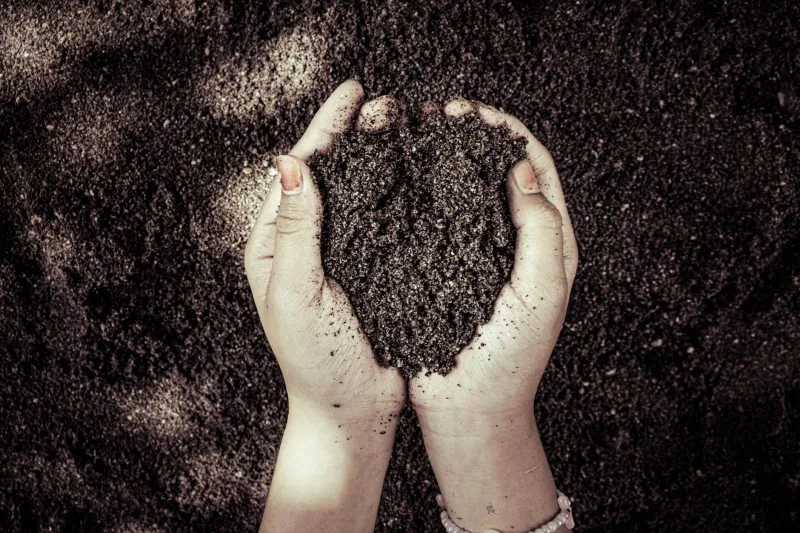
Walk through any farming community today and you'll see pickup trucks loaded with soil samples headed to agricultural labs for expensive chemical analysis. But talk to farmers over 70, and they'll tell you about a different time — when their grandfathers could grab a handful of earth, take a deep breath, and tell you more about that soil than any lab report.
This wasn't folk wisdom or old wives' tales. It was a sophisticated diagnostic technique that American farmers perfected over generations, and modern soil science is proving they were onto something remarkable.
The Science Behind Dirt's Signature Scent
That distinctive smell of fresh earth after rain has a name: petrichor. But what most people don't realize is that healthy soil produces dozens of different aromatic compounds, each telling a specific story about what's happening underground.
When soil microbes break down organic matter, they release volatile organic compounds that experienced noses can distinguish. Sweet, earthy scents indicate healthy microbial activity. Sharp, ammonia-like odors suggest nitrogen imbalances. Musty smells often point to fungal problems, while sour notes can reveal pH issues.
"My grandfather could walk a field and tell you which sections needed lime, which were too wet, and where the nitrogen was running low," says Tom Henderson, a third-generation farmer from Iowa. "He'd just grab dirt, smell it, and know. I thought it was magic until I started learning about soil biology."
The Lost Art of Sensory Agriculture
Before the 1950s agricultural revolution brought widespread soil testing, American farmers relied heavily on their senses. They'd assess soil by feel, smell, and even taste — techniques passed down through families like treasured recipes.
Experienced farmers could detect:
- Moisture levels by the intensity of earthy scents
- Organic matter content through sweet, composty aromas
- Compaction problems when soil smelled flat or lifeless
- Seasonal readiness for planting based on warming soil's changing bouquet
- Disease pressure through off-putting chemical notes
This wasn't guesswork. Farmers who mastered these techniques often outperformed their neighbors, producing better yields with fewer inputs. They were reading chemical signatures that labs now measure with expensive equipment.
When Lab Tests Took Over
The decline of sensory soil assessment began in the 1960s when agricultural extension services started promoting scientific soil testing. County agents encouraged farmers to send samples to labs rather than trust their noses.
While lab testing provided precise chemical breakdowns, something was lost in translation. Labs could measure exact pH levels and nutrient concentrations, but they couldn't capture the dynamic, living aspects of soil that experienced farmers detected through smell.
"We got really good at measuring what was dead in the soil," explains Dr. Sarah Mitchell, a soil ecologist at Kansas State University. "But we stopped paying attention to what was alive — the microbial communities that healthy farmers could actually smell."
The Quiet Revival
Today, a small but growing movement of regenerative farmers is deliberately reviving these sensory techniques. They're not abandoning modern science, but rather combining lab data with the diagnostic power of their noses.
Jared Thompson runs a 500-acre organic operation in Vermont and has spent five years training his sense of smell. "I can walk my fields now and detect problems weeks before they'd show up in plant tissue tests," he says. "It's like having an early warning system."
Thompson teaches workshops on sensory soil assessment, drawing farmers curious about reducing their reliance on expensive testing. His students learn to distinguish between the fresh, sweet smell of active compost decomposition and the flat, chemical odor of soil treated with synthetic fertilizers.
What Your Nose Can Still Tell You
Even if you're not farming, your sense of smell can reveal surprising information about soil health in your garden or local environment:
Rich, earthy scents after rain indicate healthy microbial activity and good organic matter content.
Sweet, composty aromas suggest active decomposition and nutrient cycling.
Sour or sharp odors often point to poor drainage or chemical imbalances.
No smell at all from soil might indicate low biological activity or excessive chemical treatment.
Why This Matters Now
As concerns about soil degradation and agricultural sustainability grow, these traditional diagnostic techniques offer valuable insights. Soil testing labs excel at measuring chemical properties, but they often miss the biological indicators that farmers' noses detected naturally.
"We're rediscovering that healthy soil has a signature smell profile," says Dr. Mitchell. "Farmers who lost that knowledge are finding that rebuilding their sensory skills actually makes them better land managers."
The next time you're in a garden or walking through farmland, try taking a deeper breath. That handful of earth might have more to tell you than you think — if you know how to listen with your nose.
Some knowledge doesn't need a laboratory to be valid. Sometimes it just needs attention.