Below the Surface: The Quiet American Movement Digging Homes Into the Earth
Below the Surface: The Quiet American Movement Digging Homes Into the Earth
Most people, when they picture underground living, picture science fiction. Bunkers. Dystopias. Maybe a hobbit hole if they're feeling whimsical. What they don't picture is a perfectly ordinary American family cooking dinner, watching TV, and sleeping comfortably — all while the thermometer outside reads 112 degrees.
But that's exactly what a surprisingly overlooked slice of American history looks like.
The Problem Nobody Talks About
Here's something worth sitting with: the American Southwest has been brutally, dangerously hot for a very long time. Long before climate change became a dinner-table conversation, settlers and Indigenous communities in places like New Mexico, Arizona, and West Texas were already grappling with summers that could kill. Air conditioning wasn't available to most households until the 1950s and 60s. Before that, people had to get creative.
Some got very creative.
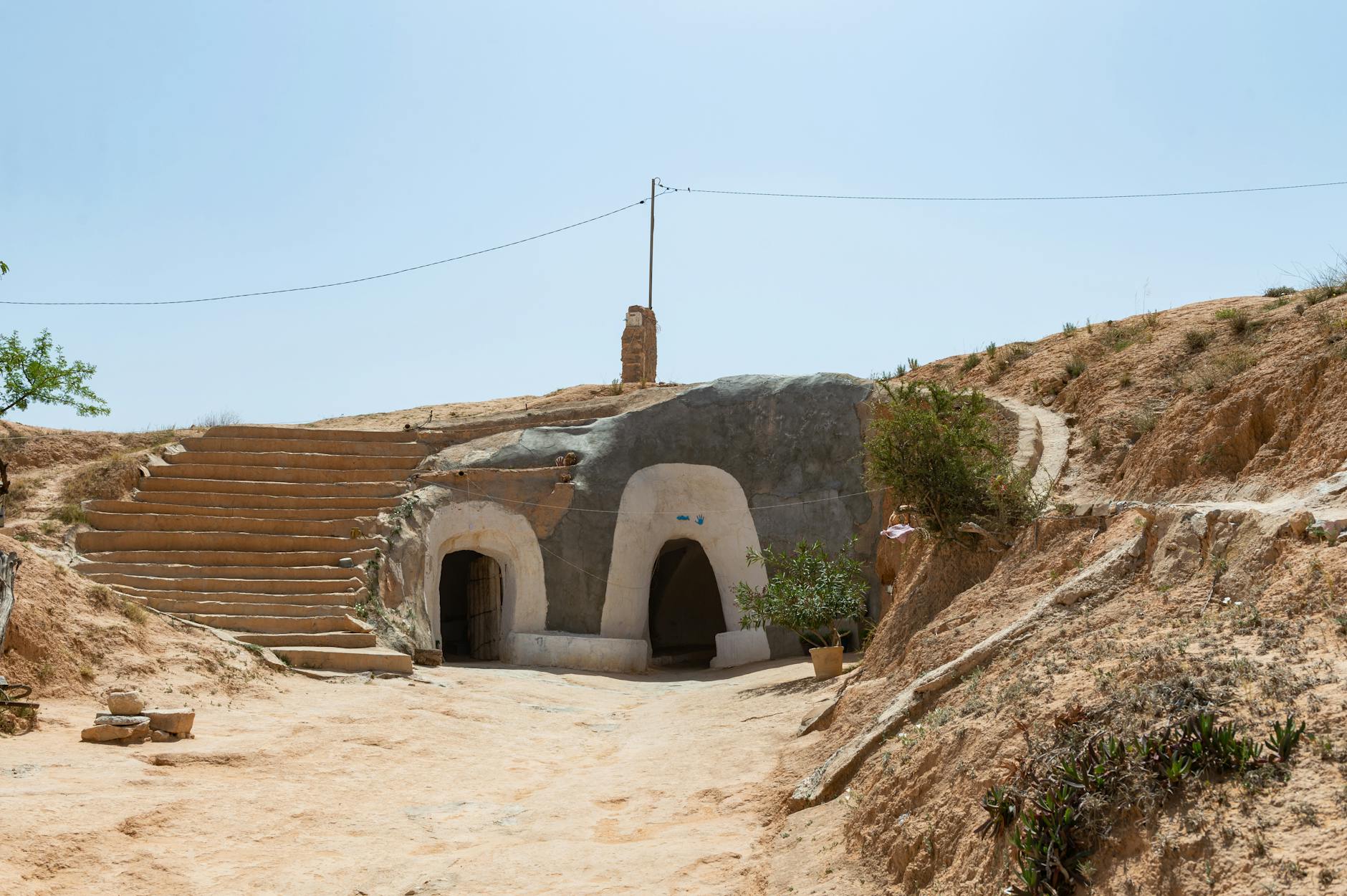
Across a handful of communities — most of them too small or too remote to ever land in a travel magazine — residents quietly did what humans in hot climates had done for thousands of years: they dug down.
America's Underground Neighborhoods
The most remarkable example most Americans have never heard of sits in the high desert of New Mexico. In the early twentieth century, homesteaders and miners in parts of the region began carving dwellings directly into soft sandstone hillsides or building homes that were partially or fully recessed into the earth. The soil, it turned out, is a remarkable insulator. Just a few feet below the surface, ground temperature in the desert Southwest hovers between 55 and 65 degrees Fahrenheit year-round — regardless of what's happening above.
This wasn't primitive desperation. It was applied physics.
Similar communities popped up in the Texas Panhandle, where early settlers on the Llano Estacado built "dugout" homes — essentially rooms excavated from the earth and roofed with timber and sod — that stayed livable through summers that routinely cracked 100 degrees. Tens of thousands of people lived this way across the plains and desert regions through the late 1800s and early 1900s. Then air conditioning arrived, the dugouts were abandoned, and the whole chapter got quietly filed away under "things we used to do before we knew better."
Except — did we actually know better?
The Coober Pedy Comparison Nobody Makes
If you've heard of underground living at all, you've probably heard of Coober Pedy, the Australian opal-mining town where roughly half the population lives in underground homes called "dugouts" because surface temperatures regularly exceed 120 degrees. It gets written up as a curiosity, a novelty, a quirky travel destination.
What rarely gets mentioned is that Americans were doing almost exactly the same thing — quietly, practically, without fanfare — in their own backyard. The difference is that Australia kept going with it. America largely didn't.
The People Quietly Reviving It
That might be changing. A small but growing community of builders, architects, and plain-spoken pragmatists across the American Southwest and Midwest are revisiting earth-sheltered construction with renewed seriousness.
In southern Missouri — a state that doesn't typically come up in conversations about innovative housing — there's a loosely connected community of earth-sheltered homeowners who've been building into hillsides for decades. Some are off-grid idealists. Others are just people who got tired of high utility bills. Their homes maintain steady interior temperatures with minimal heating or cooling, and many report energy costs a fraction of what their neighbors pay.
In New Mexico, a new generation of architects is blending traditional Pueblo building techniques — which have always incorporated thermal mass and earth integration — with modern materials. Organizations like the Earthship Biotecture movement, based outside Taos, have been pushing earth-integrated building for years, though they tend to get more attention in Europe than in the American mainstream press.
And in Arizona, where Phoenix recently recorded its hottest summer ever, a handful of homeowners are exploring partially recessed construction not as a lifestyle statement but as a straightforward survival strategy.
Why It's Worth Paying Attention Now
Here's the part that makes this more than just an interesting historical footnote. The US is getting hotter. The summers of the last five years have broken records in states that weren't historically known for extreme heat — not just Arizona and Texas, but Oregon, Kansas, even parts of the upper Midwest. Cooling costs are rising. Power grids are straining.
And yet the conversation about solutions almost always jumps straight to high-tech fixes: better AC units, smart thermostats, rooftop solar. Almost nobody in mainstream housing discourse is pointing at the ground and saying, what if we just used that?
The thermal properties of the earth haven't changed. The physics that kept a dugout homesteader cool in 1887 are identical to the physics available to a homeowner in 2025. The technology required is, in many cases, less sophisticated than what it takes to build a standard wood-frame house.
The Forgotten Logic That Keeps Coming Back
There's something quietly satisfying about a solution this old and this simple gaining traction again. No app required. No supply chain dependencies. No proprietary system to maintain. Just soil, geometry, and a basic understanding of how heat moves.
The Americans who built underground a century ago weren't behind the times. In at least one important way, they were ahead of them. And the people digging back in today — whether in the Missouri hills or the New Mexico desert — aren't eccentrics. They're just paying attention to something the rest of us forgot to notice.
Sometimes the most forward-thinking move you can make is to look at what got left behind.