When Churches Kept Power Tools Instead of Prayer Books
Walk into most American churches today and you'll find hymnals, maybe some folding chairs, and coffee supplies for Sunday fellowship. But venture into the basement of St. Mark's Lutheran in Walnut Creek, Ohio, and you'll discover something that would have been completely ordinary a century ago: shelves lined with cake pans, extension ladders, and a surprisingly well-maintained collection of gardening tools, all available for anyone in the congregation to borrow.
"People think it's this new sharing economy thing," says Margaret Chen, who manages what St. Mark's still calls their "community library." "But my grandmother told stories about borrowing the church's canning supplies every August. This isn't innovation — it's just what we used to do."
She's pointing to a tradition that once flourished across small-town America but has become so rare that most people assume it never existed at all.
The General Store That Never Sold Anything
Before Home Depot and Harbor Freight made tools cheap enough for everyone to own duplicates, American communities developed an elegant solution to the problem of expensive, rarely-used items. From the 1880s through the 1950s, churches, general stores, and community centers quietly operated lending libraries for objects instead of books.
The system worked exactly like you'd expect. Need to dig fence posts? Sign out the post-hole digger. Hosting a church supper? The large roasting pans lived in the basement, along with enough folding tables to seat a small wedding. Planning to can tomatoes? The pressure cookers and Mason jar supplies were available from late July through September.
"It wasn't charity," explains Dr. Patricia Wilkins, who studied these lending networks while researching rural economics at Iowa State University. "It was pure practicality. Why would twelve families each buy a post-hole digger they'd use twice a year when they could share one that lasted decades?"
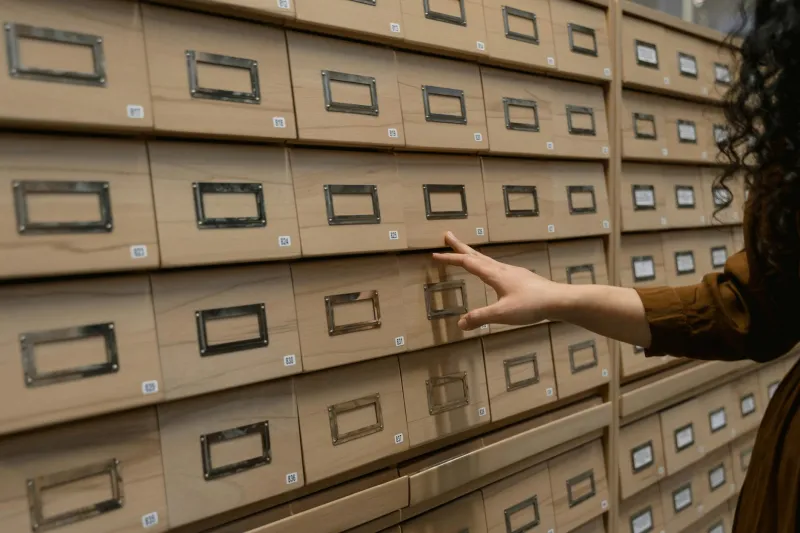
The most sophisticated systems developed their own catalogs. The Grange Hall in Millerville, Pennsylvania, maintained a handwritten ledger that read like a hardware store inventory: "1 apple butter kettle (copper, serves 200), 1 hay fork (long handle), 1 wedding arch (white, some paint chips), 1 ice cream churn (hand crank, works good)."
Why America Stopped Sharing
The decline of object lending libraries happened gradually, then all at once. Post-war prosperity made individual ownership more affordable. Suburbanization scattered communities that had once lived within walking distance of a shared space. Chain stores offered cheap tools that seemed to eliminate the need for sharing altogether.
But the final blow came from an unexpected source: liability insurance.
"By the 1970s, churches and community centers started worrying about lawsuits," Wilkins notes. "What happens if someone gets hurt using the borrowed ladder? What if the pressure cooker explodes? It became easier to just stop lending altogether."
Insurance companies didn't explicitly ban object lending, but they made it expensive enough that most organizations quietly dismantled their collections. Tools got sold at church rummage sales. Cake pans found their way into individual kitchen cabinets. The lending ledgers were tucked into storage boxes and forgotten.
The Modern Revival You Haven't Heard About
While tech companies were busy creating apps for everything, a handful of American communities were quietly reviving the old lending library model — with some unexpected updates.
The Berkeley Tool Library in California operates like a traditional library, complete with membership cards and due dates. Members pay $30 annually for access to everything from circular saws to specialty baking pans. But unlike their historical predecessors, they've added workshops on tool maintenance and safety — addressing the liability concerns that killed many earlier programs.
In Portland, Oregon, the Northeast Tool Library has become something more like a community center. "People come in to borrow a tile saw and end up learning how to install a backsplash," says volunteer coordinator James Murphy. "It's not just about the tools — it's about sharing knowledge."
Even more surprising: some of these modern tool libraries are thriving in dense urban neighborhoods where residents have the income to buy their own equipment but lack the storage space.
"I live in a 600-square-foot apartment," explains Brooklyn resident Sarah Kim, who belongs to the local tool library. "I can't store a pressure washer, but I can definitely use one twice a year. This makes more sense than ownership."
What We Lost When We Stopped Sharing
The disappearance of object lending libraries represents more than just an economic shift — it marked the end of a particular kind of community knowledge.
When tools lived in shared spaces, they came with informal expertise. The person who signed out the apple butter kettle usually knew how to use it properly, and they'd pass that knowledge along to the next borrower. Church ladies taught newcomers how to operate the industrial coffee percolators. Farmers shared techniques for maintaining the communal equipment.
"You weren't just borrowing a tool," Chen reflects, watching a young father check out a high chair from St. Mark's collection. "You were tapping into decades of community experience about how to use it right."
Modern tool libraries are trying to recreate that knowledge-sharing aspect, but they're starting from scratch in communities where institutional memory was lost decades ago.
The Future of Sharing Without Apps
The revival of object lending libraries suggests that the sharing economy might work better through physical spaces than digital platforms. Unlike app-based sharing, community tool libraries build ongoing relationships between neighbors. They create regular touchpoints for people who might otherwise never interact.
They also solve problems that apps can't address: storage, maintenance, and the simple fact that some things work better when they're shared rather than owned.
"We're not trying to be nostalgic," Murphy says. "We're trying to be practical. Most people don't need to own a power washer. But everyone needs access to one occasionally."
For communities willing to revive the tradition, the model is surprisingly simple: find a space, start with basic tools that neighbors actually need, and let the collection grow organically. The hardest part isn't the logistics — it's remembering that sharing used to be ordinary, not revolutionary.