The House Swap That Predated Every App: How Americans Once Traded Homes on Pure Trust
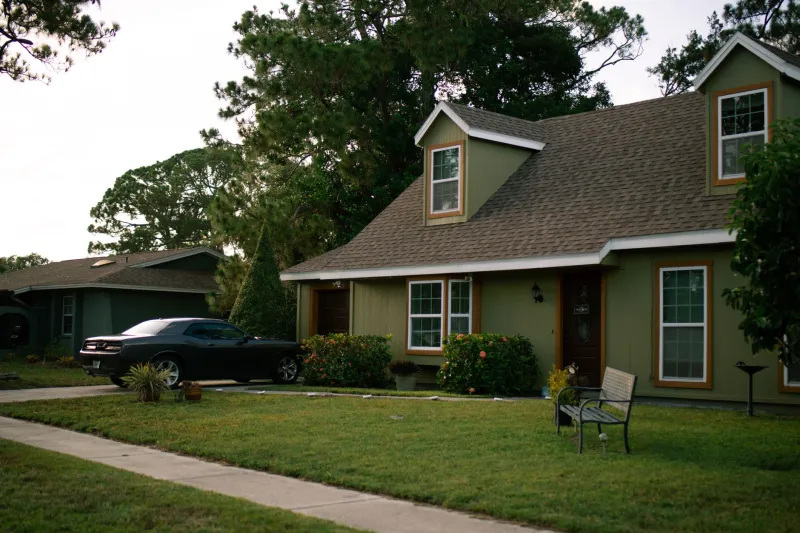
Somewhere in a box of old papers, there might be a directory — small, spiral-bound, printed on paper that's gone slightly yellow — listing hundreds of American families willing to trade their home for a week or two with someone they'd never met. No background checks. No verified reviews. No algorithm deciding your trust score.
Just a name, a town, a description of the house, and the quiet understanding that this was how decent people operated.
Home exchange is often talked about as if it were a recent innovation — a clever disruption of the hospitality industry, enabled by the internet and smartphone verification. But the truth is more interesting than that. Americans were swapping houses on a handshake basis for decades before any of it existed, and they were doing it at scale.
The Directory That Started It All
The organized home exchange movement in the United States traces back to the early 1950s, when a schoolteacher in New York named David Ostroff began circulating a modest printed list of families interested in trading homes during summer vacation. The idea was almost embarrassingly simple: if you have a house in a place someone else wants to visit, and they have a house in a place you want to visit, why not just swap?
Within a few years, that informal list had grown into what became known as the Vacation Exchange Club — one of the first formal home exchange networks in the country. By the 1960s and 70s, the club was publishing annual directories that circulated among thousands of members, listing homes from suburban New Jersey to rural Colorado to beachfront Florida.
Membership cost a modest fee. Participation required submitting a listing of your own home. And the whole enterprise ran on something that modern platform designers would find genuinely alarming: reputation without receipts.
Trust as the Only Currency
Here's the part that tends to surprise people when they first hear about it: these exchanges worked. Consistently, and at scale, for decades.
Families who participated in home exchange networks during the 1960s through 1990s — and many are still around to tell the story — describe an almost universal experience of arriving at a stranger's home to find it exactly as described, clean and welcoming, with a handwritten note on the kitchen table and sometimes a bottle of wine in the fridge.
The reason wasn't naivety. It was structural. To participate in a home exchange, you had to put your own home on the line. You weren't just trusting the other family — they were trusting you equally. The mutual vulnerability created a kind of symmetry that self-selected for responsible participants. People who would trash someone else's house were also people who didn't want their own house treated that way. The system filtered itself.
There were also social enforcement mechanisms that don't exist in the same way today. Many exchange networks operated through affinity groups — teachers exchanging with teachers, church communities swapping within their networks, professional associations facilitating member-to-member trades. Your reputation in those communities was real and lasting. A bad exchange experience didn't result in a one-star review that faded into an algorithm. It resulted in people knowing who you were.
What Middle-Class America Was Actually Solving For
To understand why home exchange thrived when it did, it helps to remember what American family travel looked like in the postwar decades. The interstate highway system was expanding. Car culture was exploding. But hotel costs were real, and for a family of four spending two weeks on the road, accommodation was often the budget item that made or broke the trip.
Home exchange solved that problem elegantly. You stayed in a real house with a kitchen, a yard, and enough bedrooms for everyone. Your hosts — who were off staying in your house — had the same experience. Nobody paid for lodging. The only cost was the directory membership and the gas to get there.
For the growing American middle class of the 1960s and 70s, this was genuinely transformative. Families who couldn't afford resort vacations suddenly had access to a beach house in Maine, a farmhouse in Vermont, a bungalow in Sarasota. Not because they were wealthy, but because they had something equally valuable: a home worth staying in and a reputation worth protecting.
The Slow Disappearance
Home exchange didn't vanish overnight. It faded gradually through the 1980s and 90s as American travel culture shifted in ways that made the old model feel complicated.
Liability anxiety grew. The culture of litigation made people nervous about strangers in their homes in ways that earlier generations hadn't been. Insurance products that covered home exchange guests were hard to find and harder to understand. The legal ambiguity of the whole arrangement — which had never been a problem when everyone just trusted each other — suddenly felt like a gap that needed filling.
At the same time, the affordable travel landscape was changing. Budget airlines were making distant destinations accessible. Hotel chains were standardizing the experience of staying somewhere unfamiliar in ways that felt safer, even if they were less interesting. The frictionlessness of the known quantity started to win.
By the time the internet arrived and made everything theoretically easier, home exchange had already retreated to a niche. Organizations like HomeExchange.com and several European equivalents brought the concept online in the late 1990s and 2000s, adding digital directories and eventually review systems. But the mainstream had moved on.
What the Algorithm Can't Replicate
Airbnb launched in 2008 and within a decade had fundamentally reshaped how Americans think about staying in someone else's space. It's a remarkable achievement. It's also worth noticing what it required: identity verification, payment processing, insurance products, review systems, dispute resolution mechanisms, and a customer service operation that handles thousands of complaints a week.
All of that infrastructure exists to solve a problem that home exchange networks solved differently — not with systems, but with community. The old model wasn't less sophisticated. It was sophisticated in a different way, relying on social capital instead of technical capital.
Neither approach is pure. But there's something worth noticing in the fact that the trust-based model worked for decades with almost none of the scaffolding we now consider essential.
Somewhere, someone still has that old spiral-bound directory. The listings are long outdated. But the houses were real, the families were real, and for a few summers in the 1970s, a family from Ohio slept in a house in California that belonged to people they'd never met — and left it exactly as they found it.
Because that's just what you did.