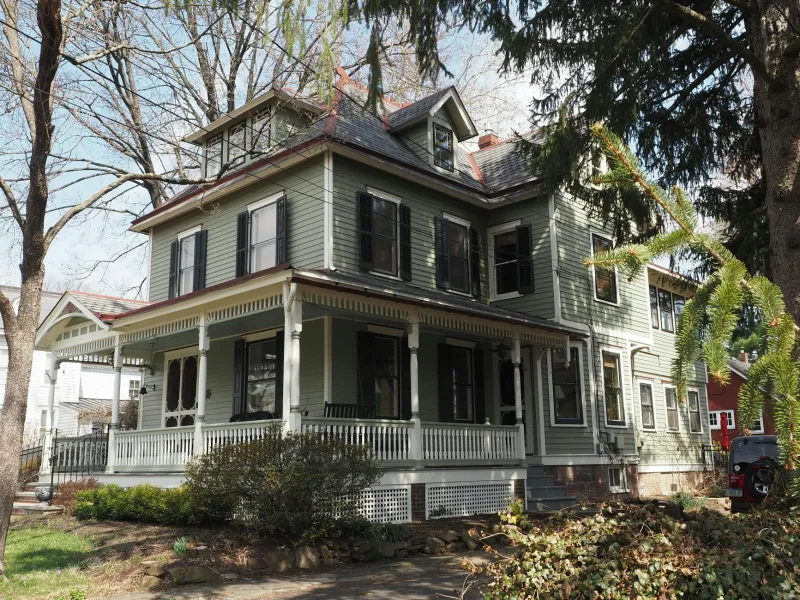
Walk through any American neighborhood built before 1950, and you'll notice something odd: houses with mysterious screened-in porches on the second floor, often featuring electrical outlets and sometimes even built-in beds. These aren't just quaint architectural details — they're remnants of what was once considered essential medical equipment.
When Fresh Air Was Medicine
Between the 1890s and 1940s, sleeping porches weren't a luxury — they were a prescription. American doctors routinely recommended outdoor sleeping to treat tuberculosis, the era's leading killer. The theory was simple: fresh, moving air would strengthen the lungs and prevent the stagnant conditions where disease thrived.
But tuberculosis wasn't the only target. Physicians prescribed sleeping porches for insomnia, nervous disorders, and what they called "neurasthenia" — basically, the stress and exhaustion of modern life. Even healthy families built them as preventive medicine.
Dr. Philip King Brown, a prominent San Francisco physician, wrote in 1916: "The sleeping porch is not a fad, but a recognition of a physiological need." He wasn't alone. Medical journals of the era are filled with studies showing improved health outcomes for outdoor sleepers.
 Photo: Dr. Philip King Brown, via campbellbrown.co.nz
Architecture Built Around Breathing
The sleeping porch craze reshaped American home design. Entire neighborhoods in cities like Denver, Phoenix, and San Antonio were planned with outdoor sleeping in mind. Houses featured elaborate screened structures that could accommodate whole families.
Some sleeping porches were simple screened rooms. Others were architectural marvels with retractable glass panels, built-in storage for bedding, and even small fireplaces for winter use. The wealthy built multi-story sleeping towers. Working-class families converted existing porches or built simple platforms off bedroom windows.
Schools got in on the trend too. "Fresh air schools" with outdoor classrooms and sleeping areas became common in cities dealing with tuberculosis outbreaks. Some hospitals built entire wings as open-air wards.
The Vanishing Act
By the 1950s, sleeping porches had largely disappeared from new construction. Air conditioning promised climate control without bugs, weather, or neighborhood noise. Antibiotics made tuberculosis treatable. Suburban sprawl meant houses could spread out rather than up.
More importantly, American culture had shifted. The idea of sleeping outdoors began to feel primitive, even dangerous. Parents worried about security. The medical establishment moved away from environmental treatments toward pharmaceutical ones.
What We Lost in Translation
Modern sleep research suggests those old doctors were onto something. Studies show that sleeping in cooler, well-ventilated spaces improves sleep quality. Fresh air increases oxygen levels and can reduce stress hormones.
Dr. Matthew Walker, author of "Why We Sleep," notes that our ancestors naturally slept in cooler, airier conditions. "We've created these hermetically sealed sleep environments that may actually work against our natural sleep patterns," he explains.
 Photo: Dr. Matthew Walker, via drchatterjee.com
Research also shows that exposure to natural temperature variations — warmer days, cooler nights — helps regulate circadian rhythms. Sleeping porches provided this naturally.
The Quiet Revival
A small but growing number of architects and wellness advocates are rediscovering sleeping porches. Not as medical treatment, but as a way to reconnect with natural sleep patterns.
Architect Sarah Susanka, known for the "Not So Big House" movement, has designed several modern homes with sleeping porches. "There's something profoundly restorative about sleeping with just screens between you and the night air," she says.
Some hotels are catching on. The Blackberry Farm resort in Tennessee offers "sleeping porch suites." Several bed-and-breakfasts in New England have restored their original sleeping porches for guests seeking a different kind of rest.
Building Your Own Fresh Air Sanctuary
You don't need to renovate your entire house to experiment with outdoor sleeping. A screened tent on a deck, a mosquito net over a patio daybed, or even strategic window placement can create similar conditions.
The key elements are simple: protection from insects, adequate ventilation, and temperature control through airflow rather than mechanical systems. Some modern enthusiasts use high-quality outdoor fabrics and furniture designed for year-round use.
Breathing Room for Better Sleep
Our great-grandparents understood something we're just rediscovering: that sleep is as much about environment as exhaustion. They built their homes around the idea that fresh air wasn't just pleasant — it was essential.
While we're unlikely to see a full return to the sleeping porch era, the principle behind it remains sound. In our climate-controlled, sealed-up world, maybe the radical thing isn't sleeping indoors — it's stepping back outside.