Your Great-Grandmother Knew Something About Groceries That You Don't
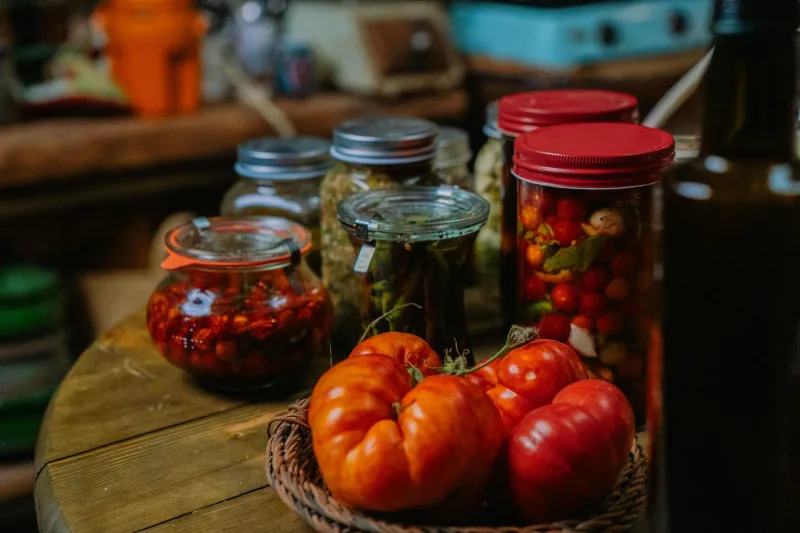
The Skill That Skipped a Generation
Somewhere between the postwar kitchen revolution and the rise of the modern supermarket, a remarkable body of household knowledge quietly went extinct. Your great-grandmother almost certainly knew how to put up a jar of tomatoes. Her mother could cold-pack peaches, ferment a crock of cabbage, and preserve the summer harvest well enough to feed a family through February. It wasn't a hobby. It wasn't a lifestyle aesthetic. It was just what you did.
Then the grocery store arrived — reliably stocked, year-round, with everything already done for you — and within a generation, most American households lost that knowledge entirely. Not because people stopped wanting it. Because they simply never needed it again.
Until now, maybe.
Across the US, something interesting is happening in kitchens that have nothing to do with cooking shows or influencer trends. Quietly, in community centers and church basements and YouTube comment sections, people are rediscovering the old art of food preservation — and finding that it's far less intimidating than they expected.
What 'Putting Up' Actually Means
The old American phrase for home food preservation was putting up — as in, putting food up for later. It covered a wide range of techniques, each suited to different foods and different storage situations.
Water bath canning is probably the most familiar. You fill sterilized glass jars with high-acid foods — tomatoes, fruit, pickles, jams — seal them with two-piece lids, and process them in boiling water for a set amount of time. The heat drives out oxygen, creates a vacuum seal, and makes the contents shelf-stable for a year or more. The equipment is minimal: a large pot, a jar rack, and the jars themselves. A basic starter kit runs about $30.
Pressure canning handles low-acid foods like green beans, corn, and meat — things that water bath canning can't safely preserve. It requires a pressure canner, which is a more significant investment (roughly $80–$150), but it opens up a much wider range of foods for long-term storage.
Fermentation is arguably the easiest entry point of all. To make basic sauerkraut, you need cabbage, salt, and a jar. That's it. The process is almost entirely hands-off — beneficial bacteria do the work while you wait. Fermented foods like kimchi, pickles, and kombucha have also attracted renewed interest for their potential gut health benefits, which has brought a whole new audience to techniques that Depression-era households used purely out of practicality.
Cold packing and root cellaring are less common in urban settings but still practiced widely in rural areas — storing hardy vegetables like carrots, potatoes, and apples in cool, dark spaces where they'll keep for months without any processing at all.
Why People Are Coming Back to It
The revival isn't happening for one reason. It's happening for several at once, and they tend to reinforce each other.
Grocery prices have climbed sharply in recent years, and that's made the math on home preservation genuinely compelling. A flat of tomatoes at a farmers market in August — when they're at peak season and priced accordingly — can be water bath canned into a year's worth of crushed tomatoes for a fraction of what you'd pay for the canned equivalent at the store. The same logic applies to jams, pickles, applesauce, and salsa.
But it's not just about saving money. There's a growing interest in knowing exactly what's in your food — no additives, no preservatives, no ingredients you can't pronounce. Home-preserved food is, almost by definition, transparent. You made it. You know what went in.
And then there's the satisfaction factor, which is harder to quantify but consistently cited by people who've gotten into it. Opening a jar of tomatoes you put up in August, in the middle of January, and using them in a pasta sauce — there's something about that loop that feels genuinely good in a way that's difficult to explain until you've done it.
Where to Actually Learn This
The National Center for Home Food Preservation (nchfp.uga.edu) is the authoritative source for safe canning practices in the US, maintained by the University of Georgia with USDA backing. Their guides are free, detailed, and regularly updated. If you want to know the correct processing time for a specific food, this is where you look.
Beyond that, the best learning tends to happen in person. Many county Cooperative Extension offices — the agricultural outreach arms of state universities — still offer free or low-cost canning workshops, particularly in late summer when produce is in season. These aren't niche programs. The Extension system was literally created in part to teach this kind of practical food knowledge, and it's been doing it since 1914.
For fermentation specifically, the book The Art of Fermentation by Sandor Katz has become something of a foundational text for the revival. Katz writes with genuine enthusiasm for the history and science of fermented foods, and the book covers everything from basic sauerkraut to far more obscure traditions from around the world.
Online communities have also played a significant role. Subreddits dedicated to canning and fermentation have tens of thousands of active members sharing recipes, troubleshooting problems, and — importantly — correcting unsafe practices before they become dangerous.
The One Thing Worth Knowing Before You Start
Food safety matters here in a way it doesn't with most cooking. Botulism — the bacterial toxin that home canning is specifically designed to prevent — is rare but serious, and it's odorless and colorless, which means you can't detect it by smell or sight. The rules around canning (proper acidity levels, correct processing times, approved jar types) exist for real reasons.
The good news is that following those rules isn't complicated. It just requires using tested recipes from reliable sources rather than improvising. Stick to the USDA-approved guidelines, especially when you're starting out, and the risk is genuinely minimal.
Your great-grandmother didn't have a food science degree. She just knew the rules and followed them. You can do the same — and probably spend a lot less at the grocery store while you're at it.