When Farmers Read Caterpillars Like Doppler Radar
Every October, Dr. Mike Peters gets the same question from his graduate students at the University of Massachusetts: "Professor, why are we measuring caterpillars instead of using weather satellites?"
Peters, an entomologist who studies woolly bear caterpillars, has spent the last decade investigating whether the folk wisdom that guided American farmers for centuries contains any actual science. His findings have surprised meteorologists and vindicated rural grandmothers in equal measure.
"I started this research to debunk the folklore," Peters admits. "But the data keeps suggesting that these caterpillars are reading environmental signals that our instruments miss."
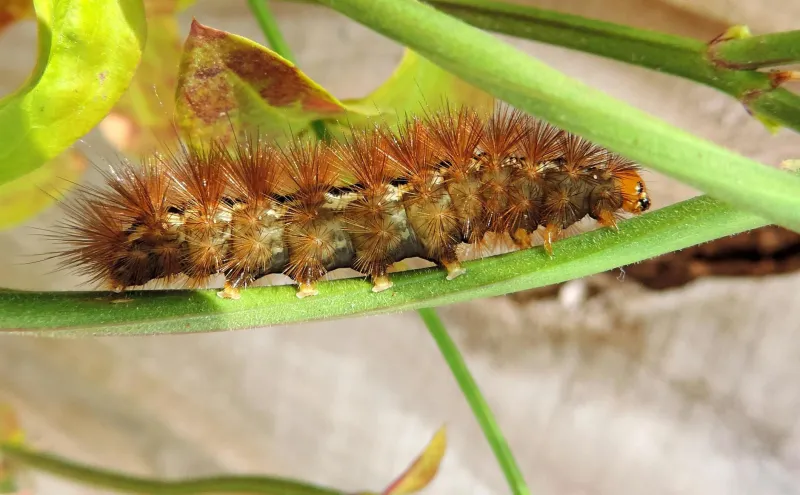
He's talking about the woolly bear caterpillar — those fuzzy black and brown larvae that cross sidewalks every fall, supposedly carrying winter predictions in their coloration. According to rural tradition, wider brown bands mean milder winters, while mostly black caterpillars signal brutal cold ahead.
Modern meteorology has long dismissed this as pure superstition. But Peters' research suggests the relationship between caterpillar coloration and winter weather might be more complex than either folklore or science initially understood.
The Original Weather Network
Before the National Weather Service existed, American farmers developed an elaborate system of natural weather prediction that would make modern meteorologists dizzy. They read cloud formations, wind patterns, animal behavior, and plant growth with the precision of scientists — because their livelihoods depended on it.
Woolly bear caterpillars were just one piece of a much larger forecasting puzzle. Farmers also examined:
-
Persimmon seeds: Split them open, and the shape inside supposedly predicted winter weather. Spoon shapes meant lots of snow to shovel, knife shapes suggested cutting winds, and fork shapes indicated mild winters perfect for pitching hay.
-
Onion skins: Thick, papery outer layers indicated harsh winters ahead. Thin skins suggested mild weather.
-
Acorn production: Heavy acorn years supposedly preceded severe winters, as trees prepared extra food for wildlife survival.
-
Squirrel behavior: Early nest-building and aggressive nut-gathering indicated animals sensed harsh weather coming.
"These weren't random superstitions," explains Dr. Jennifer Walsh, who studies traditional ecological knowledge at Colorado State University. "They were systematic observations passed down through generations of people whose survival depended on reading environmental cues accurately."
The Science Behind the Folklore
Modern research has revealed that many traditional weather predictors contain kernels of legitimate science — though not always in ways that folklore understood.
Take woolly bear caterpillars. Peters' research shows that their coloration does correlate with weather patterns, but not in the way rural tradition suggested. The caterpillars aren't predicting future weather; they're reflecting past weather conditions that influenced their development.
"Caterpillars that experienced warmer temperatures during their growth phase develop more brown coloration," Peters explains. "Colder conditions produce more black pigmentation. So they're actually recording the weather they've already experienced, not forecasting what's coming."
But here's where it gets interesting: the weather conditions that affect caterpillar development often persist into winter. A warm, dry fall that produces brown-banded caterpillars frequently continues as a mild winter. Cold, wet conditions that create black caterpillars often signal the beginning of harsh winter patterns.
"The caterpillars aren't fortune tellers," Peters notes. "But they're excellent historians of recent weather trends — and those trends often continue."
When Plants Know More Than Satellites
Persimmon seed folklore has proven even more intriguing to researchers. Dr. Susan Martinez at the University of Tennessee has been studying whether persimmon trees actually respond to environmental cues that predict winter severity.
Her preliminary findings suggest that persimmon trees may be sensitive to soil temperature, moisture levels, and other factors that correlate with winter weather patterns. Trees experiencing certain fall conditions produce seeds with distinctive internal structures — the same structures that folklore interpreted as weather symbols.
"We're not saying the seeds contain tiny spoons that predict snow," Martinez clarifies. "But the tree's response to environmental conditions might encode information about the seasonal transition that farmers learned to read accurately."
Similarly, research on acorn production has revealed that oak trees increase nut production in response to environmental stresses that often precede harsh winters. Heavy acorn years don't cause severe winters, but they may indicate the same large-scale climate patterns that produce both abundant nuts and brutal cold.
The Limitations of Folk Forecasting
While some traditional weather predictors contain legitimate environmental signals, researchers emphasize that folklore weather prediction has significant limitations.
First, most folk methods work only on regional scales. A woolly bear caterpillar in Vermont might accurately reflect New England weather patterns but tell you nothing about conditions in California or Texas.
Second, traditional methods excel at identifying general trends — harsh versus mild winters — but can't provide the specific timing and intensity data that modern forecasting demands.
"Folklore might tell you that winter will be severe," Walsh notes. "But it can't tell you that a blizzard will hit next Tuesday at 3 PM, drop 18 inches of snow, and be followed by temperatures of minus 15 degrees. For practical planning, you need both types of information."
Third, climate change has complicated traditional patterns. Many folk weather predictors evolved during relatively stable climate periods. Rapid environmental changes may be disrupting the natural relationships that made traditional forecasting accurate.
What Modern Meteorology Misses
Despite its limitations, traditional weather forecasting highlights gaps in modern meteorological approaches. Satellite data and computer models excel at short-term prediction but struggle with seasonal forecasting — exactly where folk methods showed their strength.
"We can predict next week's weather with remarkable accuracy," admits Dr. Robert Chen, a climatologist at NOAA. "But seasonal forecasting — predicting whether this winter will be harsh or mild — remains one of our biggest challenges."
Traditional methods also integrate multiple environmental signals in ways that modern forecasting often misses. Farmers didn't just look at one indicator; they synthesized observations about plants, animals, soil conditions, and atmospheric patterns into comprehensive seasonal assessments.
"Folk forecasting was essentially crowd-sourcing environmental data," Chen explains. "Farmers across a region were making observations, comparing notes, and developing collective wisdom about seasonal patterns. We're just starting to figure out how to replicate that kind of integrated environmental monitoring."
The Modern Revival
Some contemporary meteorologists are beginning to incorporate traditional knowledge into their forecasting approaches. The National Weather Service now tracks some biological indicators — like bird migration patterns and plant flowering times — as supplementary data for seasonal prediction.
Meanwhile, citizen science projects are reviving systematic observation of traditional weather indicators. The Woolly Bear Festival in Vermillion, Ohio, has become an annual gathering where researchers collect caterpillar data from across the Midwest. Similar projects track persimmon seeds, acorn production, and animal behavior patterns.
"We're not going back to pre-scientific weather prediction," Peters emphasizes. "But we're learning that traditional knowledge contains environmental insights that pure technological approaches might miss."
Reading the Signs Today
For modern observers curious about traditional weather forecasting, researchers suggest starting with simple, systematic observation rather than relying on folklore rules.
Pay attention to when local trees drop their leaves, how thick their bark appears, and whether wildlife behavior seems different from previous years. Notice soil moisture, cloud patterns, and wind direction changes. Track these observations over multiple seasons.
"The value isn't in predicting weather," Walsh suggests. "It's in developing a deeper relationship with your local environment. Traditional forecasting taught people to notice subtle environmental changes that most of us miss completely."
Whether woolly bear caterpillars can actually predict winter severity remains debatable. But they've definitely proven one thing: the natural world contains information that humans have been reading for centuries — and that modern science is only beginning to understand.
So the next time you see a fuzzy caterpillar crossing the sidewalk, take a closer look. It might not be predicting the future, but it's definitely telling a story about the world around you that's worth hearing.