When American Farmers Could Tell You Everything About Their Land Just by Touching It
When American Farmers Could Tell You Everything About Their Land Just by Touching It
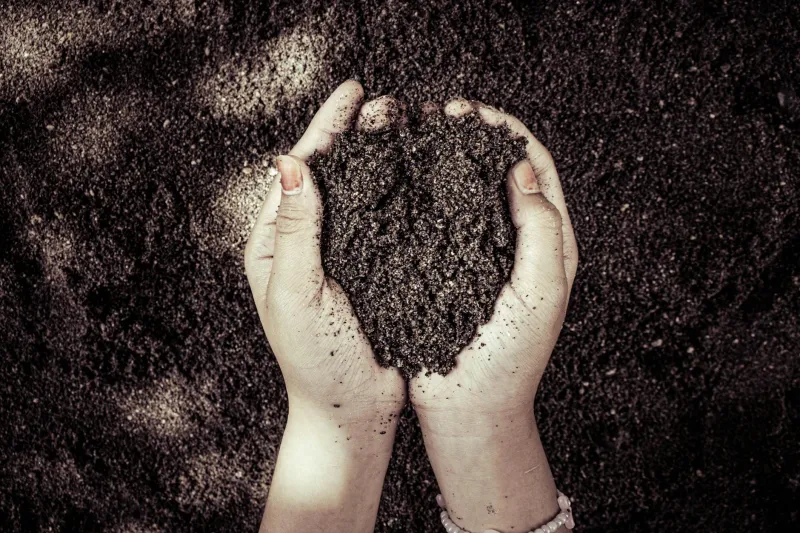
Walk into any modern farm supply store, and you'll find shelves lined with soil testing kits, pH meters, and nutrient analysis guides. But for most of American agricultural history, farmers needed none of these tools. They could tell you whether their soil was ready for planting, what nutrients it lacked, and even predict the season's yield — all by grabbing a handful of dirt.
This wasn't guesswork. It was a sophisticated system of sensory evaluation that took decades to master and could rival any laboratory test for practical accuracy.
The Touch Test That Told Everything
The foundation of traditional soil reading started with what farmers called the "squeeze test." They'd grab a handful of moist soil and compress it between their palms, watching how it behaved. Sandy soil would crumble immediately — great for drainage but terrible for holding nutrients. Clay soil would form a tight ball that held its shape, signaling potential waterlogging issues but excellent nutrient retention.
The sweet spot was loam, which would hold together briefly before breaking apart. "Good soil feels like chocolate cake batter," explained 89-year-old Nebraska farmer Harold Whitman, whose family has worked the same land since 1887. "Not too wet, not too dry, and it wants to stick to itself just enough."
But the squeeze test was just the beginning.
The Nose Knows More Than You Think
Experienced farmers developed an almost supernatural ability to diagnose soil health through smell. Healthy soil has a distinctive earthy aroma — what scientists now know comes from a compound called geosmin, produced by beneficial soil bacteria. But farmers could detect much more nuanced scents.
Sour or rotten odors indicated poor drainage and anaerobic conditions. A metallic smell suggested high iron content. Sweet, almost alcoholic scents warned of fermentation from too much organic matter breaking down too quickly. Some farmers claimed they could even smell nutrient deficiencies, though this skill was rare and took years to develop.
"My grandfather could walk across a field in spring and tell you exactly where the wet spots would be come fall, just by the smell of the soil," recalls Maria Santos, a third-generation farmer in California's Central Valley. "He was right every single time."
The Controversial Taste Test
Perhaps the most surprising aspect of traditional soil reading was the practice of actually tasting the earth. While it sounds unsanitary by today's standards, farmers insisted it provided crucial information that no other method could match.
Salty soil indicated high sodium levels that could stunt plant growth. Sweet soil often meant good organic content. Bitter tastes warned of chemical imbalances or contamination. Experienced soil readers claimed they could detect pH levels within a narrow range just by the way soil felt on their tongue.
"People think we were crazy, putting dirt in our mouths," laughs retired Iowa corn farmer Robert Chen, whose family immigrated from China in the 1920s and brought their own soil-reading traditions. "But that soil fed our family for three generations. We knew what we were doing."
Reading the Living Landscape
Traditional soil evaluation extended beyond the dirt itself. Farmers read the entire ecosystem as a diagnostic tool. Certain weeds indicated specific soil conditions — dandelions thrived in compacted soil, while clover suggested good nitrogen levels. The presence of earthworms was always a positive sign, indicating healthy organic matter and proper pH balance.
Even the way water moved across the land told stories. Farmers watched how rain pooled, where it ran off, and how quickly it soaked in. They noticed which areas dried first after storms and where morning dew lingered longest.
Why We Lost This Knowledge
The decline of sensory soil reading began in the 1940s with the rise of industrial agriculture and chemical fertilizers. Government extension services promoted scientific testing methods, and the new approach promised precision that human senses supposedly couldn't match.
"The problem was, we threw out generations of accumulated wisdom in favor of numbers on a page," argues Dr. Sarah Martinez, a soil scientist at Cornell University who studies traditional farming methods. "Those laboratory tests tell us what's in the soil, but they don't tell us how the soil is functioning as a living system."
The shift toward large-scale farming also meant fewer people working directly with the land. Farmers managing thousands of acres couldn't possibly maintain the intimate relationship with soil that their ancestors had with smaller plots.
The Quiet Revival
Today, a small but growing movement of farmers is rediscovering these old skills. Regenerative agriculture advocates argue that understanding soil as a living system requires more than chemical analysis — it demands the kind of intuitive knowledge that only comes from direct, sensory engagement.
Some agricultural schools now offer workshops on traditional soil evaluation techniques. Young farmers seek out elderly mentors who still remember the old ways. Online forums share tips for developing "soil sense" — the ability to read land health through touch, smell, and observation.
"I use both methods now," explains Jake Thompson, a 32-year-old organic farmer in Vermont. "I'll send samples to the lab for detailed analysis, but I also grab handfuls of soil every morning during planting season. My hands tell me things the lab report can't — like whether the soil is truly ready for seeds or if I need to wait another week."
What We Can Learn Today
The traditional art of soil reading offers lessons beyond agriculture. It represents a way of knowing that modern life has largely abandoned — knowledge gained through patient observation, accumulated experience, and direct sensory engagement with the natural world.
While few of us will ever farm, we can apply the same principles of careful attention to our gardens, houseplants, or even our local parks. Learning to really observe the natural world around us, using all our senses, connects us to the landscape in ways that no app or digital tool can replicate.
The next time you're in a garden, try the squeeze test. Grab a handful of soil and pay attention to how it feels, smells, and behaves. You might be surprised by what the earth has to tell you — if you know how to listen.